Greek Mythology
Memnon — Greek Mythology
Son of Dawn and King of the Ethiopians
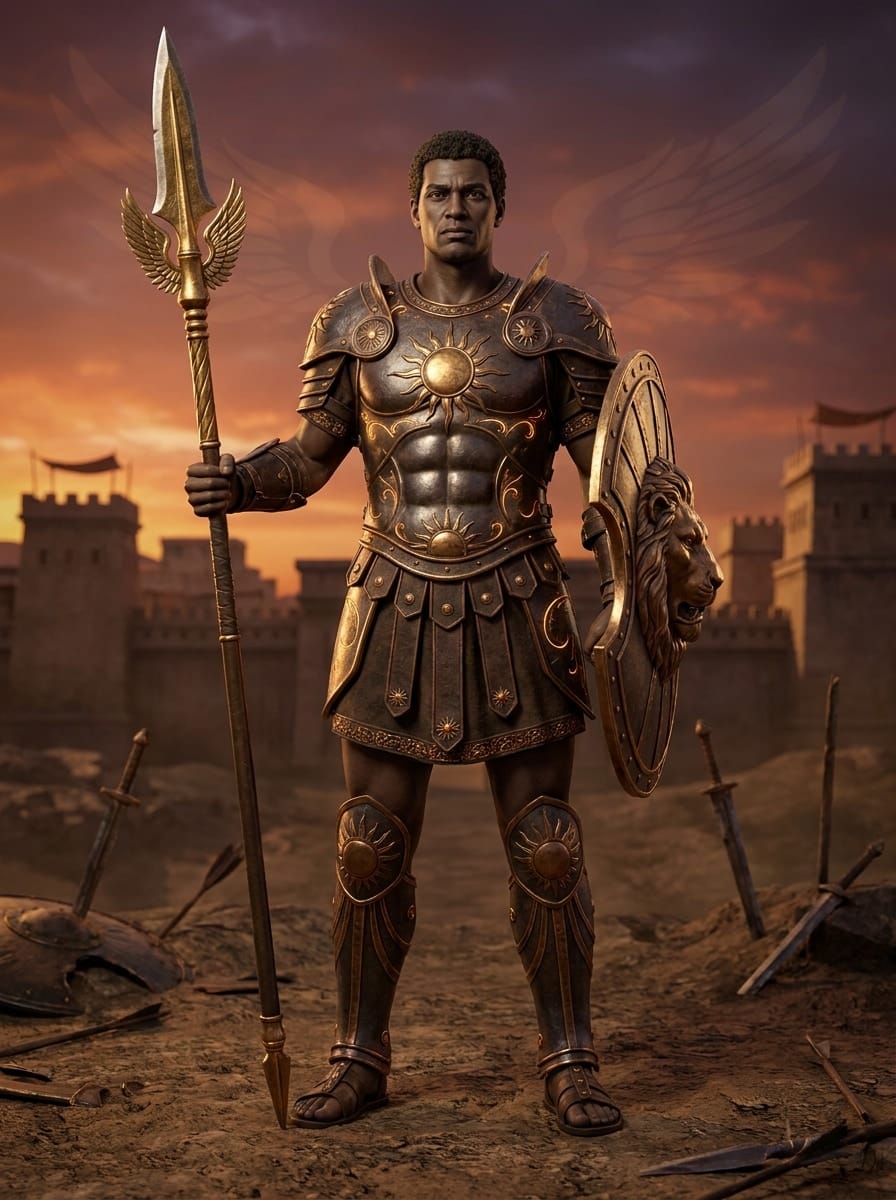
Memnon is the son of Eos, goddess of dawn, and Tithonus, and king of the Ethiopians. After Hector’s death, he leads an army from the east to Troy, wearing armor forged by Hephaestus, and brings a brief hope to Priam and the endangered city. On the battlefield he kills Antilochus, son of Nestor, then duels Achilles, finally falling beneath the spear of the greatest Greek hero.
Domain
Heroic kingship, dawn lineage, Trojan War, eastern reinforcements, battlefield honor
Symbols
Dawn-red light, spear, chariot, armor forged by Hephaestus, Ethiopian battle standard, a mother’s mourning
Article
Origins and Lineage
Memnon stands at the border between godhood and kingship. His mother is Eos, goddess of dawn, who opens heaven and earth each day with morning light; his father is usually named as Tithonus, a figure connected with the royal house of Troy. This lineage makes Memnon neither an ordinary mortal nor a deathless Olympian, but a heroic king touched by divine radiance who must still endure the outcome of battle.
In the later phase of the Trojan War, Memnon comes from the distant east with the Ethiopians to aid Priam. This project’s story presents him as the reinforcement who arrives after Hector’s death: the city has been crushed by the fame of Achilles, and Memnon’s coming makes the Trojans lift shield and spear again. He is not a guest commander who boasts of deeds in a palace, but one who submits his identity directly to the test of the battlefield.
Divine Role and Attributes
Memnon’s defining qualities are not a divine office, but heroic kingship, the role of a far-off ally, and the imagery of dawn. His bond with Eos means that his appearances often carry the colors of morning, red light, eastern roads, and a mother’s watchful gaze; his royal nature appears in leading armies, keeping promises, and answering a city in peril. In the story, he wears armor forged by Hephaestus, so on the battlefield he is both protected by divine craftsmanship and drawn closer to heroes like Achilles: favored by gods, yet unable to escape death.
His character is not loudly warlike, but restrained, decisive, and deeply concerned with honor. Faced with Priam’s distress, he speaks few grand words and simply promises to fight; once he reaches the plain, he proves himself with spear and chariot. His tragedy lies there as well: Memnon fights for a city that is not his own royal seat, yet stakes all his kingly dignity on aid, oath, and valor.
Major Myths
Memnon’s most important story takes place after Hector’s death, while Troy has not yet fallen. The Trojans have lost their most reliable defender, Priam is old and grief-stricken, and the hearts of the people inside the city are wavering. Memnon arrives at Troy with the Ethiopian army and becomes a new hope. At dawn the next day, he arms himself for battle, leads his forces out through the gates, and drives the Greeks back across the plain.
In the fighting, Memnon kills Antilochus. Antilochus is the son of Nestor and a young, brave warrior in the Greek camp; his death means Memnon is no longer merely a distant reinforcement, but a formidable enemy Achilles must face himself. Memnon and Achilles then clash, two heroes with divine backgrounds and god-forged armor dueling outside the walls of Troy. The ending does not favor the son of Dawn: Memnon is killed by Achilles, and the hope Troy had just rekindled grows dim.
In traditions such as the Posthomerica, Memnon’s death brings mourning from Eos. The mother’s dawn-brightness set against the son’s death in battle gives Memnon’s image a powerful elegiac force: he arrives like morning light, briefly illuminating those around him, yet cannot prevent the darkness that will later fall over Troy.
Worship and Influence
Memnon is not an Olympian-style central figure in Greek mythology, but he holds a distinct place in the later stage of the Trojan War. He fills the question left by Hector’s death—“who can still stand against Achilles?”—and expands the war’s horizon from Greece and Troy to more distant allies in the east. Ancient literature and art often connect him with dawn, Ethiopia, his mother’s mourning, and his symmetrical duel with Achilles.
His influence comes mainly from a tragic heroic structure: he is powerful, faithful, and arrives when needed, yet still arrives too late. His presence makes the Trojan War not only the advance of the victors, but also a sequence of hopes kindled and extinguished. Memnon’s death reminds listeners that divine blood and god-forged armor cannot erase fate; in the heroic age, glory is often only a flash of light seen just before death.
Character Overview
Memnon is best understood as a calm, noble heroic king marked by the atmosphere of a foreign land. He is not the center of rage that Achilles is, nor the native defender that Hector is, but an ally who has come from afar: he brings an army, discipline, and brief hope, while also bringing the feeling that dawn is already passing away. When speaking with him, one should feel his sensitivity to honor, alliance, mother, battlefield, and death.
His contradiction is that he possesses the nobility of a goddess’s son and a king, yet cannot escape the fate of a mortal hero; he fights for Troy, yet is not Trojan; he brings the dawn, yet dies beneath that same light. Memnon’s voice should therefore be restrained but edged: he does not pity himself, does not boast, does not deny defeat, and does not allow defeat to erase the courage he once brought to a city in peril.