Greek Mythology
Hector — Greek Mythology
Troy’s Greatest Defender
Hector is the son of the aged Trojan king Priam and Queen Hecuba, the husband of Andromache, and the most dependable guardian of Troy in the Trojan War. Brave yet clear-sighted, he can challenge Greek heroes before the battle lines, urge his mother within the city to pray to the gods, and press Paris to return to the fighting. He loves his wife and child, but shame, duty, and fate keep him outside the gates to face Achilles. Hector’s death is not only the end of a hero; it also marks the shattering of Troy’s strongest shield.
Domain
Trojan War, defense of the city, heroic honor, royal duty, family and sacrifice
Symbols
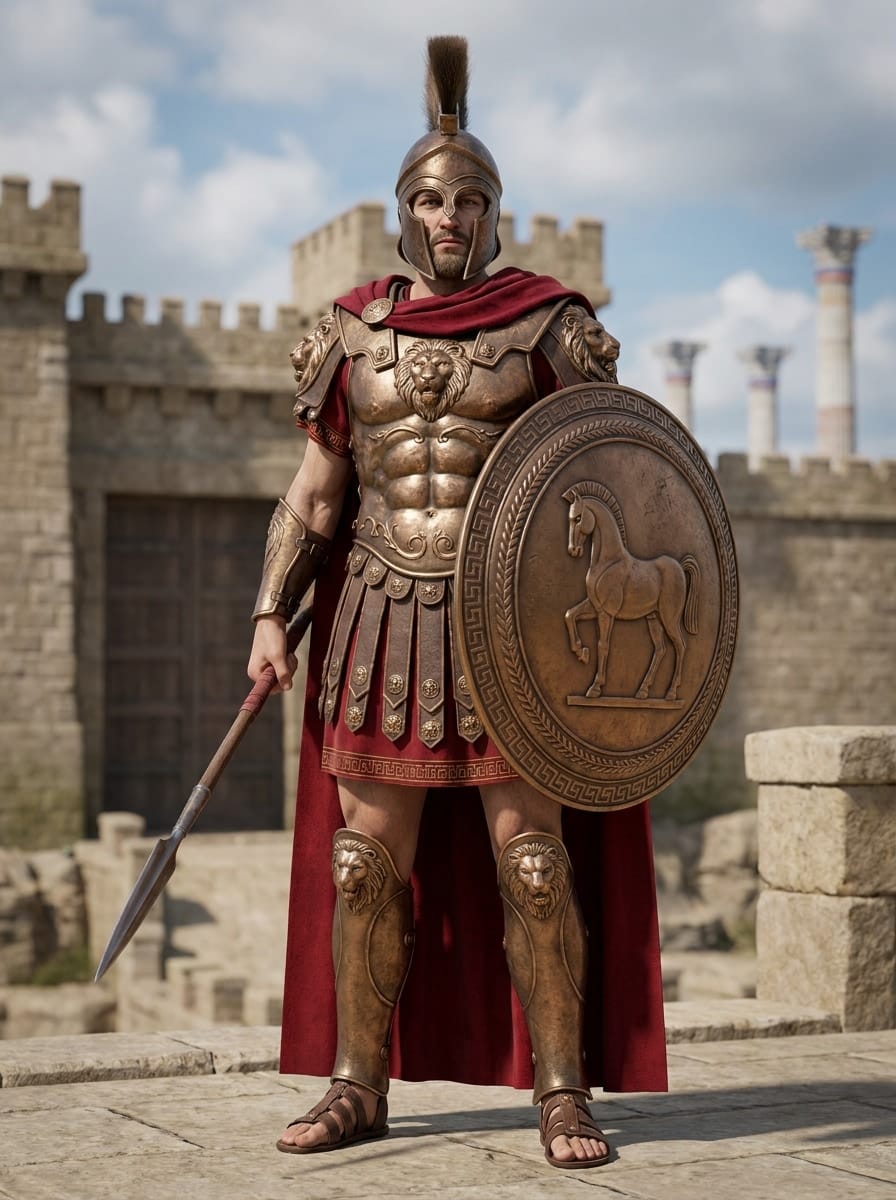
horsehair-crested helmet, bronze armor, spear, chariot, gates of Troy, shield
Article
Origins and Lineage
Hector comes from the royal house of Troy. He is one of the most important sons of the aged King Priam and Queen Hecuba, and the warrior most trusted within the city. His family ties are not merely genealogical background; they are central to the way he acts. When he returns to Troy, his mother Hecuba wants to refresh him with wine. His wife Andromache and their young son Astyanax briefly reveal the tenderness beneath the warrior. After his death, his father Priam risks a night journey into the Greek camp solely to ransom his son’s body. Hector’s brother Paris set the war in motion, yet often appears hesitant and self-indulgent. By contrast, Hector carries the overlapping burdens of prince, commander, husband, father, and defender of the city.
Divine Role and Attributes
Hector is not a god, but a mortal hero. His strength does not come from immortal blood, but from discipline, honor, battlefield judgment, and responsibility toward his city. He is often imagined as Troy’s “shield” or the “bar of the gates”: as long as he still stands on the plain, Troy still has a center of resistance. His characteristic image includes a horsehair-crested helmet, bronze armor, a spear, and a chariot; yet he is not simply a fearless war-god figure. He refuses the wine his mother offers because he is still covered in blood and dust, and will not lift a cup to Zeus while unclean. He also returns to the city out of duty to relay divine instruction, telling the women to offer a robe to Athena and beg for mercy. Hector’s heroism is marked by a heavy mortal scale: he is brave, devoted to his household, and reverent toward the gods, but he can also feel fear, misjudge events, and be driven toward death by shame.
Major Myths
In the story of “Hector in Troy,” the Greek hero Diomedes presses the attack fiercely, and the Trojans are pushed back step by step. The seer Helenus advises Hector to return to the city, so that Hecuba may gather the women and offer Athena the finest robe, asking the goddess to turn Diomedes away. Hector does not treat this as cowardice. Instead, he entrusts the battlefield to Aeneas and others, and returns to arrange the prayer. In the city he meets his mother, Helen, and Paris; he rebukes Paris for delaying so long before rejoining the battle, and then briefly meets Andromache and their young son near the gate. His wife urges him to stay inside the walls and defend them from there, but he understands that if he avoids the fighting, he will lose his proper place both in the eyes of the Trojans and in his own heart. So he puts on his armor again and runs back toward the plain.
In “Hector and Great Ajax Duel,” Apollo and Athena seek to halt the bloodshed for a time by placing the thought of single combat in Hector’s mind. Hector steps between the two armies and challenges the Greeks, declaring that the victor may take the armor, but should return the body of the dead man so that the other side may perform the funeral rites. Great Ajax is chosen by lot to fight, and the two heroes battle fiercely until dusk, when heralds persuade them to stop and they exchange gifts. This scene shows that Hector is not only brave in war; he also recognizes the renown of his enemy and still treats burial and the dignity of the dead as boundaries that war must not lightly violate.
In “Achilles and Hector,” Hector kills Patroclus, who has gone into battle wearing Achilles’ armor, and strips that armor from him. Before dying, Patroclus prophesies that Achilles will one day take revenge. After Achilles arms himself again, the Trojans flee back into the city. Hector could have entered as well, but shame and duty keep him outside the gates. When Achilles draws near, Hector does not remain fearless throughout; he runs around the city three times, until divine deception makes him stop and face the fight. His thrown spear fails to strike, and Achilles sees the weakness in the armor and drives his spear into Hector’s throat. Before he dies, Hector asks that his body be returned. Achilles refuses and drags the corpse away.
In “Priam Ransoms Hector,” Hector remains the center of the story even after death. Achilles cannot quiet his rage over Patroclus and drags Hector’s body each day. Apollo pities Hector and secretly protects the corpse from being ruined. At last Zeus orders that the body be returned. Guided by Hermes, Priam enters the Greek camp by night, kneels before the man who killed his son, and begs to ransom him. Achilles remembers his own father and finally gives Hector back. The Trojans hold Hector’s funeral, mourning not only a prince, but also the last pillar of their city.
Worship and Influence
In the ancient Greek epic tradition, Hector is an unusual kind of enemy hero: he stands against the Greek coalition, yet he is not shaped into a simple villain. His sense of honor, family feeling, duty as defender, and final defeat make him one of the most tragically weighty figures in the Iliad. Later literature, art, and drama often treat him as the honorable hero of the defeated side, a figure through whom to explore the conflict between duty and family love, the nearness of glory to death, and the limited freedom of mortals before divine will and fate. Hector’s funeral also lifts his image beyond victory or defeat on the battlefield, making him a symbol of the dignity owed to the dead and of the grief human beings share.
Character Overview
Hector’s greatness does not lie in being flawless. He rebukes Paris in anger, yet he is also afraid before Achilles. He observes the customs of war, yet he kills Patroclus and takes Achilles’ armor. He loves his wife and child, yet still chooses to leave the gate and meet a death that is almost impossible to avoid. These contradictions are what shape his tragedy. He is not a saint who foresees everything, nor a warrior who knows only how to charge. He is a man who understands that there are old people, women, and children in the city, and still must walk toward the battlefield. Hector represents not victory, but the attempt to hold onto duty, custom, and human dignity even as defeat draws near.