Cthulhu Mythos
The Other Gods — Cthulhu Mythos
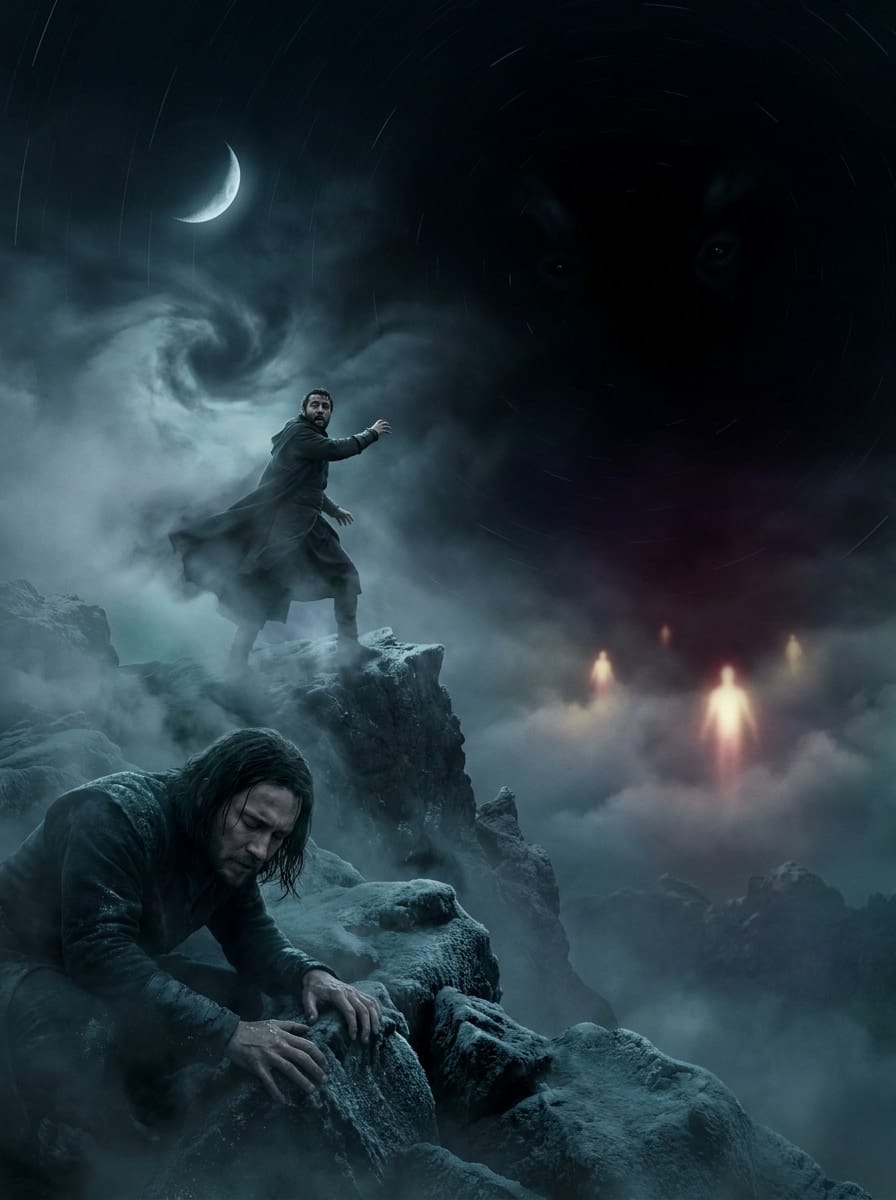
The wise Barzai refuses to believe that mankind must forever be barred from seeing the Great Ones of Dreamlands, and so he leads his disciple Atal up the forbidden peak of Hatheg-Kla. There, instead of the gentle gods he imagined, he stirs the Other Gods who guard them, and only Atal escapes back to the world of men.
Article
Summary
The wise Barzai does not accept that mortals must never behold the Great Ones of Dreamlands. Defying every warning, he takes his disciple Atal and climbs the forbidden peak of Hatheg-Kla, hoping to see for himself the gods said to dwell on the heights. The two ascend together, Barzai eager to meet a divine presence that can be understood, while Atal follows and watches his master step beyond the bounds set for human beings. When they reach the summit, Barzai finds not the mild gods of his imagining, but the Other Gods who guard them. Their coming turns the ascent into disaster. Barzai is left on the mountain peak and never returns to the world below; only Atal makes his way back down Hatheg-Kla, carrying into human memory the fate that followed his master’s violation of taboo.
The Forbidden Peak
In Dreamlands, the old people often said that the highest of mountains was home to the Great Ones.
Those gods were not the terrible monsters of later tales. At times they danced by moonlight, at times they lingered among the clouds, and once they had dwelt on lower hills. Yet the folk of the plains were always trying to climb upward, hoping to see their faces and learn where their footsteps had fallen. Whenever anyone came too near, the gods would take away their traces and move on to a colder, steeper, more difficult height.
In the end, only wind, snow, and empty stone remained on the lower peaks. No one could any longer see the altars, the footprints, or the fires they had left behind. In the tales, only one name still gave people pause: Hatheg-Kla.
That mountain stood alone over a waste of rock, its slopes wrapped in mist through every season, its summit like a black blade driven into the stars. The people of the nearby villages dared not look at it too long at night. Shepherds crossing below would keep their heads down and hurry on. For everyone knew that if the Great Ones still came to any place in the world, it would most likely be Hatheg-Kla.
And yet there are always some who refuse to treat a warning as a warning.
The Wish of the Wise Barzai
In the city of Ulthar there lived an old priest named Atal. In his youth he had followed a teacher of great renown, a man known as Barzai the Wise.
Barzai had read many ancient tales and heard many warnings from the hill folk. He knew that the Great Ones must not be seen by mortal eyes, and he knew too that there were farther, more perilous beings—the Other Gods—who kept watch over them. But the more he was told this, the less he would yield.
He often said to Atal, “If the gods truly dwell on the summit, then whoever reaches the summit may learn what they are like. A man who spends his life hearing only that he must not look and must not ask will never be more than a trembling thing at the foot of the mountain.”
Atal listened with both admiration and fear. He admired his teacher’s courage, and he feared the old warnings that had circulated for so long. The elders of the village said that if a mortal truly saw the Great Ones, they might turn away; but if the Other Gods took notice because of it, that was not a thing one could escape by shutting one’s eyes.
Barzai only grew more determined. He learned the mountain paths, gathered ropes and a staff, and chose a clear, bitter day for the ascent. Atal did not wish to go with him, yet he could not bear to leave his teacher to climb alone. So he took up provisions and followed behind Barzai.
They left Ulthar and crossed the windswept waste. Far off, Hatheg-Kla rose higher and higher, its black summit pressing against the edge of the sky like an eye that would not close.
Climbing Hatheg-Kla
At first, the path was still discernible. Gray-white steps ran between the withered grasses, and now and then a loose stone would slide from underfoot and vanish into a gulf no eye could measure. Higher up, the way gave out altogether, leaving only frozen rock and ice clinging to the seams of the cliff.
Barzai walked ahead. Though old, he was steady, leaning on his long staff as if he had already mapped the whole mountain in his mind. Atal followed behind him and often looked back toward the plain. The villages below had shrunk to grains of sand, and the roofs of Ulthar had already been swallowed by mist. Between sky and earth there was nothing now but stone, wind, and the two of them breathing hard.
Night came, and they were still climbing. The summit hid behind clouds, and the moon shone and vanished by turns. Wind drove through the cracks in the cliff, sounding at once like a flute and like weeping. Atal stopped and begged his teacher to turn back.
“Beyond this point,” he said, “the place is no longer fit for men.”
Barzai did not look around. He only lifted a hand toward the heights. “Precisely because it is not fit for men,” he said, “it is worth reaching.”
So they went on. The nearer they came to the top, the quieter all things became. Even the wind seemed pressed down by some unseen hand. Atal could hear his own heartbeat, and the scrape of his teacher’s boots against the stone. Then the clouds suddenly parted, and the stars appeared above them, cold as black water.
At last they stood on the summit of Hatheg-Kla.
Dancing Behind the Clouds
The peak was no broad expanse, only a black stone ledge hanging in the night sky. There were no trees, no grasses, no birds. At the edge, Atal looked down into rolling mist, and the world below seemed to have vanished.
Barzai, however, looked almost exultant. He stared across the empty ledge as though he had finally come to the moment for which he had waited all his life.
After a while, a faint sound came from deep within the cloud. It was not thunder, nor the tread of feet, but more like many tiny bells trembling together far away. When moonlight fell again, Atal saw that shapes seemed to be moving on the far side of the stone.
They were gentle and blurred, like figures wrapped in mist. They drifted at the summit, as if in some ancient dance. Atal’s heart tightened, and he lowered his eyes at once, afraid to look again.
Barzai, though, stepped forward.
He had seen the traces of the Great Ones and believed himself to have outrun every tale ever told of them. He spread his arms and cried out across the summit, “I have come here! I have seen you! Men will know that even gods cannot hide forever from human eyes!”
Atal was so terrified that he could scarcely stand. He heard the bell-like sound in the mist abruptly cease. The soft shapes fled like startled deer and were gone into the darkness.
Then the sky above the peak changed.
It was not cloud that covered the stars, nor did the moon sink away. Atal felt a deeper dark pressing down from beyond the heavens. That darkness had no form, yet it carried a weight that made breathing nearly impossible. The stone beneath them began to tremble, and the sea of cloud in the distance was stirred as though by unseen hands, rising in pale, heaving waves.
Barzai at last fell still.
His pride faded by degrees into fear. He seemed to understand that what he had disturbed was not only the mild Great Ones. Beyond them were farther beings—beings not of the mountain summit, beings who would not be shamed by mortal speech or argue with men. They merely opened their eyes from some unknowable abyss, as night might look down upon a grain of dust.
The Coming of the Other Gods
Atal tried to flee, but his legs felt rooted to the stone. He heard Barzai give a short cry, and in that cry there was no courage left—only terror, like a plea for help.
Then the summit cracked with a sound like splitting stone.
Mist surged in from every side and swallowed the ledge. Atal could no longer see his teacher; he only heard Barzai calling his name from within the cloud, as though he were pleading with something. Then the voice was dragged far away, as though some hand had pulled him into a gulf beyond the sky.
Atal shut his eyes and flattened himself against the rock. He dared not look, and he dared not move, but clutched at the cracks with both hands. The cold cut into his nails, and sharp stones tore his palms. Above him passed a sound beyond telling—not wings, not footsteps, not any noise made by living things. As it swept overhead, he felt his memories trembling, as though a single glance upward would make him forget the road back to mankind forever.
No one could say how long it lasted. Then, all at once, everything was still.
Atal remained on the ground until feeling returned to his limbs. Only then did he slowly open his eyes. The summit was empty. The Great Ones were gone, and the darkness had withdrawn beyond the stars. There was no body of Barzai, no blood, and no mark of struggle on the stone.
Only the mountain wind came back, as though nothing had happened at all.
Atal found his way down with great difficulty. More than once he nearly fell from the ice-sheathed cliffs, and more than once he lost his way in the mist. By the time he returned to inhabited ground, he seemed many years older. When people asked what had become of Barzai, he was silent for a long while, and then said only that his master had climbed Hatheg-Kla and never come down from the summit.
Only a Warning Remains
Later, Atal became an elder priest of Ulthar. Whenever the young came to ask about the gods upon the mountain, or whether the wise Barzai had truly seen the Great Ones, he would brighten the fire a little and ask for silence in the room.
He never cast himself as a hero, nor did he boast of that night’s witnessing. He only told people this: the Great Ones may still walk upon the high peaks, but they are not alone. If mortals imagine that by climbing high enough they can see gods as one might see quarry, then they are mistaken.
For beyond the gods there are the Other Gods.
Barzai had believed he would return with a great discovery, and in the end he left not even a shadow behind. Hatheg-Kla still stands at the edge of the waste, and at night mist still coils around its summit. Those below sometimes look up and remember the wise man who would not stop, and they remember the silence Atal brought back with him.
Since then, few have dared to climb to the mountain’s highest reach.