Cthulhu Mythos
He — Cthulhu Mythos
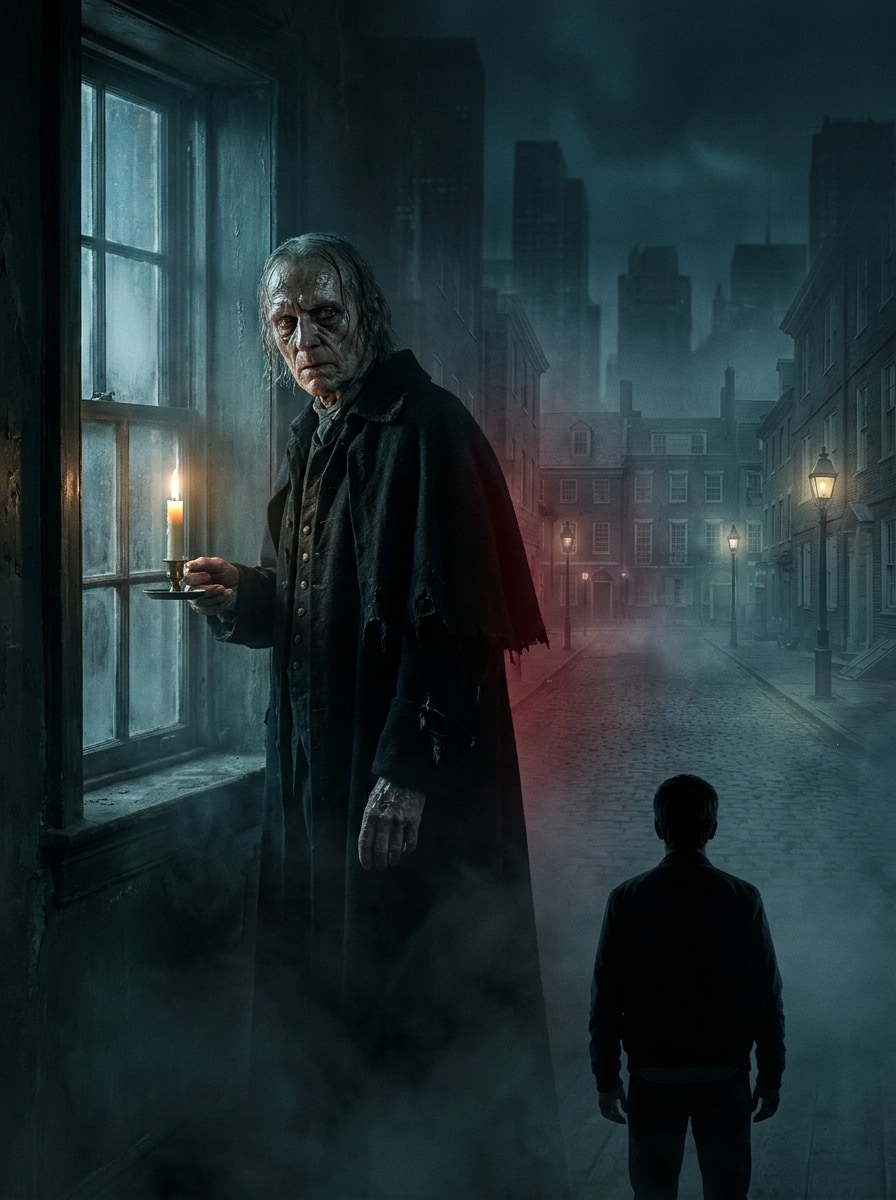
A young man newly arrived in New York, wandering sleepless through the night, meets a strange old gentleman in archaic dress. The stranger leads him into a house hidden deep among old streets, where he sees the city’s vanished past and its dreadful future. The old man guards ancient secrets by means of stolen sorcery, but in the end he is overtaken by the shades of those he once betrayed, leaving the young man to flee alone into the dark.
Article
Summary
A young man filled with poetic dreams moves to New York, believing that its towers, lights, harbor, and crowds will awaken some new inspiration in him. Yet the city that truly opens before him is noisy, hard, and suffocatingly modern. Night after night he cannot sleep, and so he wanders unnoticed through forgotten alleys, searching for whatever past has not yet been swallowed by the new metropolis. One night he meets a mysterious old man in antique clothing. The stranger seems to know an older New York that has long since disappeared, and he leads the young man through lonely streets to an old house concealed in the cracks of the modern city. Inside, the furniture, dust, and stale air belong to another age, as though time itself has congealed there. The old man tells him that he possesses an ancestral secret: a means of looking into other ages. He bids the young man gaze through the window, and the youth first beholds the old city and people long dead, then a future New York transformed into vast, alien, inhuman ruins. Past and future surge together before him, and he realizes that the city beneath his feet is not truly safe or solid at all. More terrible still, the old man is no harmless keeper of the past. Old bargains and inhuman powers have come to claim him, and from beyond the window strange presences gather to collect their debt. After the young man escapes the house, modern New York still roars around him, but he can no longer see it as a reliable shelter. The city’s old shadows and future ruins have taken root in his mind.
The Sleepless Man
When he came to New York, he carried with him many dreams that did not belong to the age.
He had imagined the great city as books had taught him to imagine it: its outlines strange and ancient in the dusk-smoke, ships from distant places entering the harbor, old streets still holding the footsteps of earlier inhabitants, and night lamps leading the mind toward deeper wonders. But once he truly lived there, he heard only the shriek of streetcars, saw only ranks of cold, hard towers, and watched crowds press through the streets without a single face willing to look up at the sky.
By day the city swept him along. By night he slept even less. His room was narrow, and beyond its walls came the sound of wheels, footsteps, and far-off whistles, as if the whole city never closed its eyes. Afraid that the last remnant of his inner dream would be ground away, he often went out deep in the night and walked until his legs ached.
He avoided the brightest places and sought out crooked, lonely streets not yet wholly made new. Now and then, in a low lintel, a row of leaning windows, or a stretch of old brick wall, he glimpsed some trace of what had been. The trace would soon vanish behind signs, wires, and new buildings, yet night after night he kept searching.
One evening, when mist clung to the corners of houses and the street lamps were dim yellow blurs, he came into an ancient quarter where the buildings seemed quieter than elsewhere. At the mouth of a narrow alley, he saw the man.
The Old Man in Outdated Clothes
He was tall and thin, and wore clothes of a remarkably antiquated cut, as though he did not belong to the present century. His hat, coat, and buckled shoes might have stepped down from an old portrait. When the lamplight touched his face, it showed a waxen yellow pallor; but his eyes were bright—too bright for comfort.
The old man spoke first, in a low, fine voice, as if he feared the walls might hear.
“Young man,” he said, “are you looking for old New York?”
The youth was startled. He had never told anyone such a thing. Yet the old man spoke as if he had followed him for many nights and knew exactly how he hated the new streets, and how he searched among broken walls and black windows for a vanished age.
The young man ought to have walked away. But in that instant longing overcame caution, and he nodded.
The old man gave a brief smile, almost without warmth. There were still places in that neighborhood, he said, that had not entirely died. Ordinary people simply could not see them. If the young man truly wished to look, he could guide him.
They walked side by side into darker lanes. The way grew narrower and narrower, and the houses leaned inward as if trying to squeeze the sky into a thread. Some doors and windows had been boarded up; some steps had cracked, with dead grass sprouting in the seams. The farther they went, the stranger the young man felt. He knew the nearby streets—or thought he did—but after the old man led him through several turns, the surroundings seemed to slip free of any map.
At last they stopped before an old house.
It was low, gloomy, and close-curtained, as if no hand had drawn those curtains open for many years. The ironwork on the door was blackened, and the threshold had been worn hollow by feet long gone. The old man drew out a key and opened the door very softly.
A smell of mildew rushed out to meet them.
The Secret in the Old House
There were no lights inside. The old man fumbled until he lit a dim lamp; its flame leaped and revealed a narrow passage, dark wall panels, and old portraits hanging along the walls. The people in those portraits wore the clothing of an earlier time; their faces were pale, and their eyes were as cold as the old man’s.
The youth followed him upstairs. The wooden steps cracked dryly beneath their feet. With every step, the house seemed to answer from the dark.
In an upper room, the old man stopped and turned to look at him. He said that this house, and the land around it, had once belonged to his forebears. In those days, the old city had not yet swollen into the monster it was now; there had still been open ground, woods, and inlets nearby. The native people knew the winds and tides of the place, and they knew certain things outsiders should never have learned.
The old man’s ancestor wanted the land—and he wanted those secrets. With drink, gifts, and counterfeit friendship he drew close to them, until at last he learned an ancient method by which a person standing in one place might look into other parts of time: scenes from the past, or scenes not yet come to pass.
Here the old man lowered his voice further.
Those who had taught the secret, he said, all died afterward. Not of illness, and not by accident. His ancestor feared that the secret might spread, and feared still more that they would try to reclaim the land, so he tampered with the feast. Once the cups had passed around, they fell one by one, and blood mingled with liquor and ran into the night-dark earth.
A chill went over the young man’s back. He wanted to ask how the old man knew all this so clearly; he also wanted to ask what became of that ancestor. But the old man gave him no chance to speak. He went to the window, stretched out a dry hand, and grasped the heavy curtain.
“You wanted to see the old city,” he said. “Then look.”
The Past Beyond the Window
When the curtain was drawn back, the young man expected to see the broken wall opposite, the black windows, and the street lamps of the night.
But that was not what lay outside.
He saw an open sky, and starlight falling on a quiet harbor. Small boats rested on the distant water; low houses lined the shore, their roofs forming a gentle line in the darkness. There were no towers, no wires, no traffic sounds. A wind seemed to come from the water, carrying the smell of earth, timber, and tide.
The young man held his breath.
The vision slowly changed. Dawn seemed to arrive; wagons appeared in the road, someone carried a bucket before a door, and men moved goods along the wharf. The city was still young. Its streets had not yet been pressed breathless beneath stone and soot. The youth gazed until he almost forgot the old man beside him, feeling that at last he had touched the lost city of his dreams.
The old man stood motionless nearby. His face was half hidden in shadow, but his eyes were fixed on the youth’s reaction, like the eyes of one who has offered up a treasure—or one who guards a trap.
After a while, he put his hand near the window again and moved it in a strange gesture. The light and shadows outside suddenly quickened. Houses rose and vanished; streets lengthened; shorelines were filled in; crowds surged and scattered. The years turned faster and faster, as though an unseen hand were riffling through them.
The young man grew dizzy. He gripped the window frame and tried to step back, but his eyes remained caught by what was outside.
“The past is only the beginning,” the old man murmured. “If you have courage enough, you may see the future.”
The City to Come
This time there was no gentle harbor beyond the window, and no old streets.
The young man saw a city vast beyond imagining. It thrust upward into the sky, its buildings massed like black cliffs, with spires, bridges, and grotesque elevated ways tangled among one another. The lights were not familiar human lights, but cold fires flickering in countless window-holes. The streets were deep as fissures, and things moved below, though he could not tell whether they were human.
The air itself seemed fouled and heavy. Far away, immense shadows rose behind the masses of buildings and sank again. The lines of the structures were wrong: some tilted, some twisted, as though they had not been built for human bodies or human eyes. The young man suddenly understood that this city was still called New York, and perhaps still stood upon the same ground, but it was no longer a place where mankind could dwell in peace.
He tried to shut his eyes, but could not. In the streets of that future he saw long, gaunt figures passing to and fro with stiff steps, their heads and shoulders shaped in ways that tightened his heart. Perhaps they had once been human. Perhaps they were merely the inheritors of a human city.
At last terror burst from his chest. The young man cried out, and the sound exploded through the room.
The old man whirled around, his face changed.
“Silence!” he hissed.
He rushed forward and seized the youth by the collar. His hands were withered, yet astonishingly strong. The young man was dragged against the edge of a table; the lamp shook, and the old portraits on the walls seemed to tremble with it. The old man cursed as he tried to force him down, as though afraid the cry had awakened something—or afraid that someone outside had heard the secret.
The youth struggled and shoved him away. They crashed about the dim room; the curtain swung wildly, and the dreadful future beyond the window flashed in and out of sight. Then, all at once, the room grew cold.
It was not the cold of night air.
It was a cold rising from below—from old wood, from the earth, from blood shed many years before.
The Shadows Come to Collect
The old man heard the sound first.
He froze where he stood, turning his head little by little toward the door. From downstairs came the faintest tread—not like living footsteps, but like many bare feet crossing wet earth. Then shadows moved in the passage, and the lamplight shrank to a small knot, nearly going out.
The young man saw blurred faces appear near the door. They did not belong to the portraits in the house, and they did not belong to this age. Those faces carried an anger from long ago; their eyes were deep and black, as if they had been staring from the night of the poisoned feast all the way into the present.
The old man gave a cry that did not sound human. He released the youth and backed toward the window, broken words spilling from his mouth—half plea, half spell. But the shadows did not stop. They crossed the threshold, through the mildew and the cold air, and came toward him.
The young man seized his chance and lunged for the door. He nearly tumbled down the stairs, striking his shoulder against the wall and scraping his palm along the rough wooden rail. Behind him came the old man’s thin scream, then a dull, tearing sound. It was soon smothered by a confusion of low whispers, like many people speaking at once from very far away.
He burst through the front door and fell into the alley.
The night fog was still there. The street lamps were still there. From far away came the sound of wheels. But he did not dare look back. He ran on, through alleys that twisted like a maze, crashing past corners and splashing through puddles until at last he saw a somewhat broader street and the lantern of a night watchman, and stopped there gasping.
He wanted to bring others back. At least, he believed he wanted to.
But when he forced his memory to guide him to that alley again, the streets had changed. There were only ordinary old houses, shut doors, and damp brick walls. The low, gloomy house was gone, and so was the old man in his antique clothes. No one had heard his cry. No one had seen any strange shadows.
From then on, New York was never again, in his eyes, a city belonging only to the present. By day its streets were still crowded, and by night its lights still shone; yet he knew that in certain forgotten corners old crimes had not truly passed away. They were only hidden behind walls, within windows, and inside the cracks of time, waiting until the debtor was recognized at last.