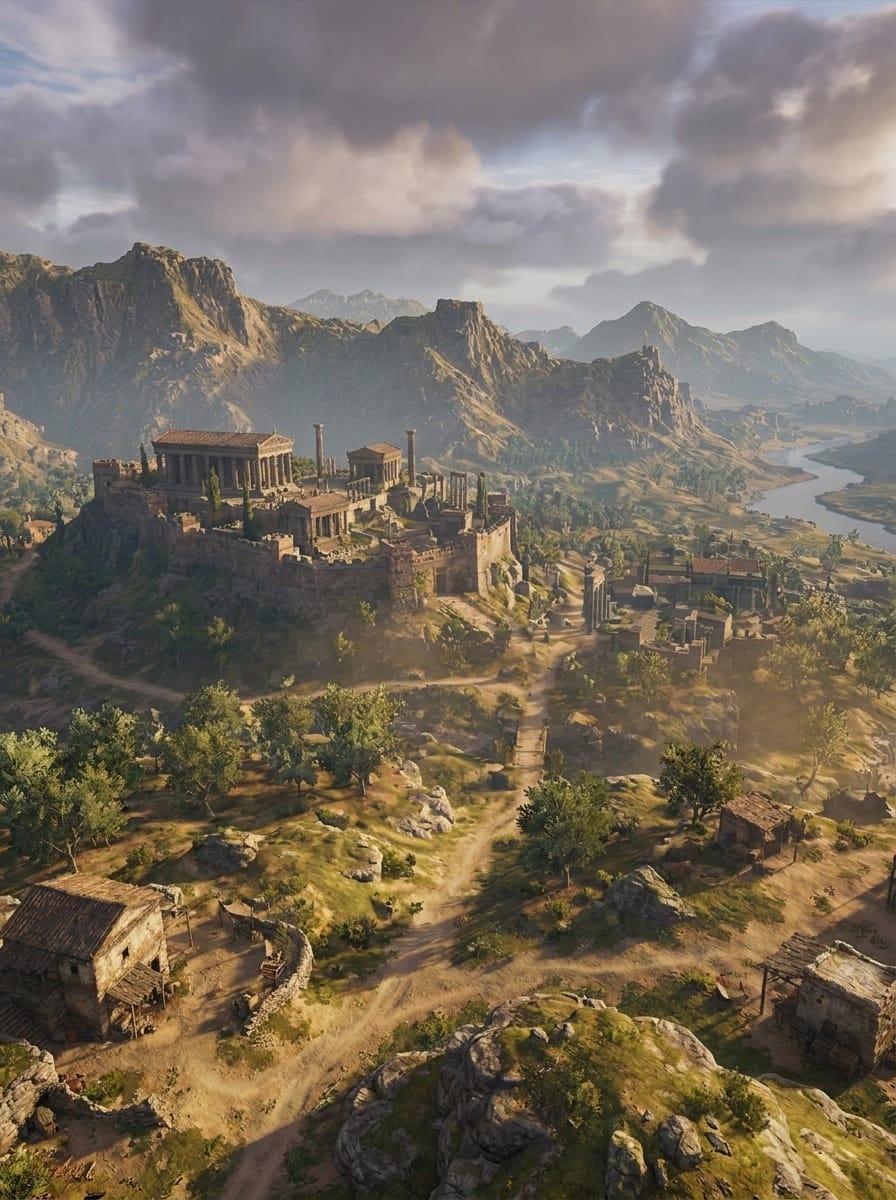
Greek Mythology
Sparta — Greek Mythology
Sparta is an important city-state of Laconia in Greek mythology and the royal city associated with Helen, Tyndareus, Menelaus, and other royal figures. It is especially important in the Trojan War tradition, because Helen's marriage, her abduction, and the oath sworn by the Greek kings all begin from this setting.
Overview
Sparta lies in Laconia and appears in the stories through its palace, altar, sites outside the city, and roads leading toward the coast. Amyclae is presented as a place near Sparta, connected with the legend of Hyacinthus and Apollo; the Laconian coast appears in the account of Paris taking Helen away.
Article
Role in Greek Mythology
In Greek mythology, Sparta is first of all a center of kingship and marriage politics. Tyndareus receives Helen's suitors here from across Greece, and, on Odysseus' advice, has them swear an oath to recognize Helen's future marriage and defend her husband. Helen later marries Menelaus, making Sparta the seat of Menelaus' kingship and royal honor.
In the prelude to the Trojan War, Sparta is also the place where the conflict is set in motion. Paris comes as a guest to Menelaus' palace and later carries off Helen and treasure; this dishonors the Spartan royal house and revives the oath once sworn by the suitors. Sparta is therefore not only Helen's homeland or the site of the palace, but also one of the central places through which the Greek kings are drawn into the Trojan War tradition.
Geographical Background
Sparta lies within Laconia and is linked with the royal palace, altar, sacred places outside the city, Amyclae, and the Laconian coast. The palace is the main setting for Helen's suitors, Menelaus' reception of Paris, and the empty royal chambers after Helen's departure; the altar is the ritual place where the suitors swear their oath.
Amyclae near Sparta appears in the story of Hyacinthus as part of the Laconian landscape of hills and open ground. The account of Helen leaving Sparta also mentions the coast and ships, so the city functions in the stories both as an inland royal center and as a place connected with sea travel across the Aegean.
Related Stories
"Theseus and Helen" mentions this place: Theseus and Pirithous come to Laconia, abduct the young Helen from the region of Sparta, and take her to Attica.
"The Oath of Tyndareus" mentions this place: heroes from across Greece come to Sparta as suitors, and Tyndareus arranges for them first to swear before the gods that they will protect Helen's marriage.
"The Judgement of Paris" mentions this place: Aphrodite promises Paris Helen, who lives in Sparta, linking the judgement on Mount Ida with the Spartan royal house.
"Helen and Paris" mentions this place: Paris comes to Sparta and is received by Menelaus, then carries off Helen and treasure, becoming a major cause in the Trojan War tradition.
"Theseus and Pirithous" mentions this place: Helen is described as a daughter of Zeus living in the region of Sparta; after she is abducted, her brothers Castor and Polydeuces recover her.
"Apollo and Hyacinthus" mentions Amyclae near Sparta: Hyacinthus' death and the local cult tradition bring the Spartan surroundings into the geographical range of Apollo's mythology.