Greek Mythology
Mycenae — Greek Mythology
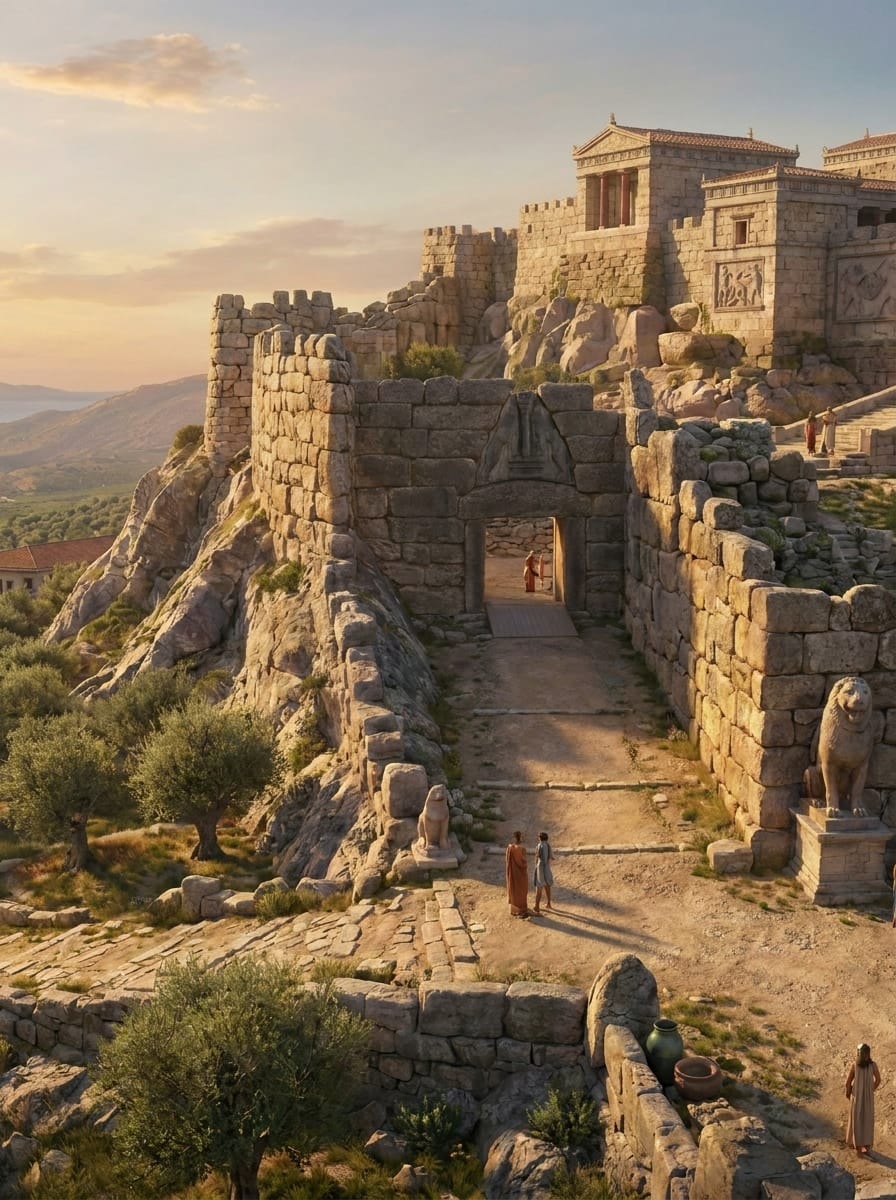
Mycenae is an important royal city in the Argos region of Greek myth, especially linked in the Heracles cycle with the kingship of Eurystheus. It serves as the political center where Heracles, bound by an oracle, receives his labors and brings back his trophies.
Overview
Mycenae lies in the northeastern Peloponnese of mainland Greece, traditionally within the Argolid. In mythic narrative it is not a wilderness or sanctuary, but a royal city with gates, a throne, and an internal structure of power; Heracles repeatedly sets out from it toward Nemea, Lerna, Crete, Thrace, and distant lands in the west.
Article
Role in Greek Mythology
In the tradition of the Labors of Heracles, Mycenae derives its central importance from Eurystheus. Eurystheus sits on the throne of Mycenae and gains the authority to command Heracles through birth order, Hera's intervention, and the oracle of Delphi. Heracles obeys him not because he has been defeated in battle, but because after killing his own kin he must atone, and the oracle directs him to serve this king of Mycenae.
Mycenae therefore becomes the command center of the labor narratives. From there Eurystheus sends out tasks, ordering Heracles to subdue monsters, obtain precious objects, or bring back living creatures from many regions. After completing them, Heracles often returns to Mycenae, or appears before Eurystheus, with such trophies as the lion skin, the boar, the bull, the mares, the belt, and the cattle. The city's role is not to provide a battlefield, but to connect royal authority, divine will, and the hero's expiation.
Geographical Background
The Mycenae of these stories is closely tied to place names in the region of Argos. Nemea and Lerna are both presented as dangerous places in that area, and Heracles travels from Mycenae to them before returning to the royal city to report his success. As the labors expand, Mycenae also becomes the point of return for journeys over a wider world: the Cretan Bull, the mares from Thrace, the belt of the Amazon queen, and the cattle of Geryon are all ultimately brought back to the royal city where Eurystheus holds power.
Name and Literary Tradition
"Mycenae" is also one of the names behind historical terms such as the Mycenaean Age and Mycenaean Greek. The early Greek material preserved on Linear B tablets is often called Mycenaean because the name is tied to the places where such material was first excavated and identified. This historical and linguistic layer is distinct from mythic narrative, but together they make Mycenae a representative name for early Greek kingship, palatial culture, and writing.
Historical and Religious Landscape
In myth, Mycenae appears as a royal city and courtly space: Eurystheus issues commands from his throne and receives, or tries to avoid, the trophies Heracles brings back to the palace gates. In historical terms, Mycenae is also a major name in the Bronze Age palatial civilization of Greece. Linear B tablets are known from Mycenae, Tiryns, Thebes, and other sites, so the city is not only a place of kingship in myth but also associated with early Greek writing and the memory of palace administration.
Related Stories
"The Madness of Heracles and Eurystheus" mentions this place: after killing his kin, Heracles consults the oracle at Delphi and is ordered to leave Thebes and obey Eurystheus, king of Mycenae.
"The Nemean Lion" mentions this place: Eurystheus sends out the first labor from Mycenae, and after killing the lion Heracles returns to Mycenae wearing its skin.
"The Lernaean Hydra" mentions this place: Heracles and Iolaus set out from Mycenae for Lerna and, after completing the task, return to Eurystheus.
"The Ceryneian Hind and the Erymanthian Boar" mentions this place: Heracles brings the hind and the boar to Mycenae, while Eurystheus responds with fear and obstruction.
"The Augean Stables and the Stymphalian Birds" mentions this place: Eurystheus continues from Mycenae to send Heracles toward Elis and Arcadia.
"The Cretan Bull and the Mares of Diomedes" mentions this place: Heracles brings the Cretan Bull and the mares from Thrace back to Mycenae as proof that the labors have been completed.
"The Belt of Hippolyta" mentions this place: because of his daughter Admete's wish, Eurystheus orders Heracles to fetch Hippolyta's belt, and the object eventually reaches Mycenae.
"The Cattle of Geryon" mentions this place: Heracles drives Geryon's red cattle back from the far west and finally brings them before Eurystheus.