Greek Mythology
The Later Tragedy of Jason and Medea — Greek Mythology
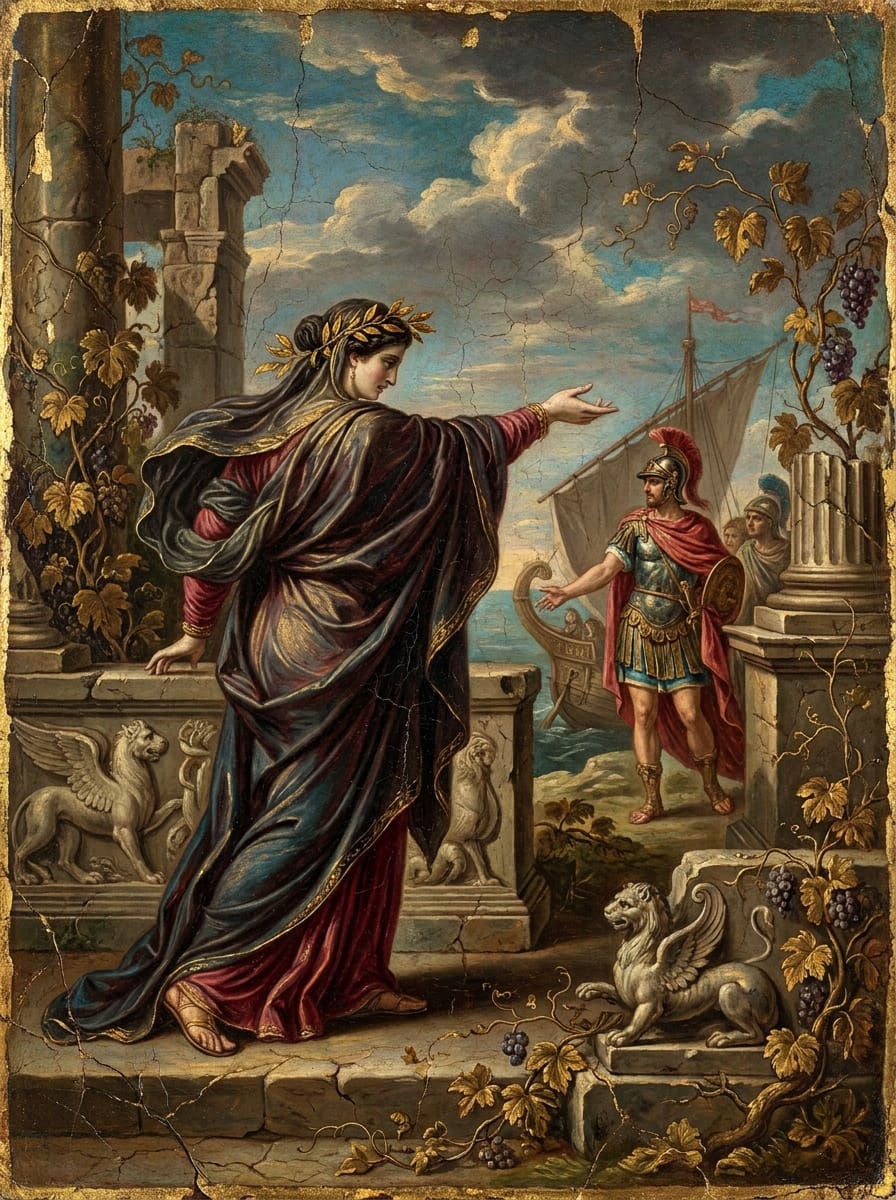
After Jason fled back to Greece with Medea, he believed he might at last live securely as a king. But in Corinth he abandoned his wife and prepared to marry a princess. Humiliated beyond endurance, Medea devised a dreadful revenge, destroying the new marriage and severing with her own hands the last bonds between herself and Jason.
Article
Summary
After Jason won the Golden Fleece, he returned to Iolcus with Medea. For his sake, Medea had betrayed her father and left her homeland; for his sake, she also plotted against the usurper Pelias. Yet that revenge made it impossible for them to remain safely in Iolcus, and the two of them had to leave and settle in Corinth. In Corinth they had children and lived for a time in peace. Later, hoping to regain royal standing through marriage, Jason agreed to wed the daughter of Creon, king of Corinth. When Medea heard the news, grief and fury overwhelmed her. She reminded Jason of all she had done for him, but Jason claimed that the new marriage was meant to secure a better future for her and for their children. Creon feared Medea’s magic and her anger, and ordered her into exile. Medea pretended to submit, asking only for one more day. In that day she arranged a refuge for herself, then sent her children to the bride with gifts steeped in poison. The princess put on the robe and the golden crown, and at once the poisoned fire seized her body; when Creon rushed to save his daughter, he too died with her. At last Medea made the most terrible choice of all: she killed her own two children, so that Jason would lose forever both his bloodline and his hope. When Jason arrived, he saw only Medea rising into the sky in a dragon-drawn chariot, carrying the children’s bodies away. He cursed her, but she did not turn back. Jason had once sailed home with a hero’s fame, but at the end of the story he was left with an empty house and a grief no deed could undo.
From Iolcus to Corinth
When the Argo returned to Greece, Jason did not take his father’s throne as quickly as he had once imagined.
He had brought the Golden Fleece back from Colchis, and he had brought Medea with him. For his sake, this woman had left her father, Aeetes, betrayed her own land, and used more than one chilling device on the road of flight. She knew how to mix drugs and speak spells, and she was brave enough to reach out her hand at the most dangerous moments. Without her, Jason would scarcely have survived the fire-breathing bronze-hoofed bulls, the field sown with dragon’s teeth from which armed warriors sprang up, or the great serpent that guarded the Golden Fleece.
Yet the throne of Iolcus remained in the hands of Pelias.
Pelias had sent Jason to fetch the Golden Fleece never expecting him to return. Now that Jason had come back alive, the old king was alarmed and afraid, and he would not yield the kingdom easily. Medea saw Jason’s hatred, and for him she laid a dreadful trap.
First she displayed her magic before the daughters of Pelias. She took an aged ram, cut it apart, placed the pieces in a cauldron, added herbs, and lit the fire beneath it. Steam surged from the pot, and the smell of the herbs filled the room. Before long, a young lamb sprang out from beside the cauldron, its fleece bright, its steps quick and light. The daughters of Pelias stared in wonder, believing that this foreign woman truly had the power to make the old young again.
Then Medea urged them to do the same for their father.
The daughters loved Pelias, and they feared the decay of his old age. They did not see the snare before them. In the night they raised the knife against him. When the blade fell, Pelias never woke again. The herbs in the cauldron seethed as before, but no young king stepped out of it. Soon the palace rang with cries of mourning. Pelias was dead, and Jason and Medea could no longer stand securely in Iolcus.
They left the city and came to Corinth.
Corinth lay near the sea routes, where merchants and sailors passed continually. It had its heights, its altars, and the palace of King Creon. There Jason and Medea settled and had children. Years went by, and the Jason people saw was no longer the young man who had first stepped aboard the Argo. He had known long voyages, battles, plots, and flight; now, more than anything, he wanted a firm place in the world.
Medea believed that, after all she had given up for Jason, she would at least be able to keep this household in a foreign land. She did not yet know that the deepest wound would not come from an enemy far away, but from the man who shared her bed.
News of the New Marriage
One day the news reached Medea: Jason was going to marry the princess of Corinth, the daughter of Creon.
It was no rumor. In the palace preparations were already being made, and in the city people spoke of the alliance. Jason would no longer be only an outsider and a wandering hero; he would become the king’s son-in-law and draw near to Corinthian power. To others, perhaps, it seemed an honorable advancement. To Medea, it was as if someone had thrust her out of her own house into the street and expected her to bow her head in blessing.
She sat inside, her heart heaving. She remembered the palace of Colchis, her father’s wrathful face, the kin and homeland she had left behind. One by one the things she had done for Jason rose before her: she had given him the ointment that let him withstand the flames of the bronze bulls; she had told him how to sow the dragon’s teeth and how to turn the earthborn warriors against one another; she had lulled the serpent that guarded the Golden Fleece and helped him carry off that shining prize. Afterward she had fled with him, bearing the guilt of a return forever barred.
Now Jason meant to cast her aside.
When Jason came to see her, Medea did not pretend to be calm. She demanded to know whether oaths no longer counted for anything. Could promises heard by the gods be thrown away like worn-out clothing? She told him that for his sake she had lost her father’s house, come to Greece, and made enemies of many people; now that he had found a new path upward, he treated her and their children as burdens.
Jason would not admit that he had done wrong. In a tone he believed reasonable, he said that he was not marrying the princess out of desire for a new bride, but in order to give the whole family stronger protection. A hero in exile had no secure foundation; if he became the king’s son-in-law, the children would rise in rank as well. As for Medea, he said, she ought not to see only the insult, but also the advantages this marriage would bring.
To Medea, those words were colder than a blade.
It was not that she failed to understand Jason’s calculations. It was because she understood them that her anger burned all the more fiercely. Jason had renamed betrayal as prudence, abandonment as care, and the sacrifices of all her years as nothing beside his own advancement.
One Day’s Reprieve
Creon too had heard of Medea’s rage.
He knew this woman was no ordinary wife. She had come from distant Colchis, understood herbs and incantations, and had once helped Jason accomplish tasks no mortal could have completed alone. If such a woman nursed hatred in her heart, no one could say what she might do. Creon feared that his daughter’s marriage would be ruined, and feared still more that sudden disaster might descend upon the palace. So he came in person to Medea’s dwelling and ordered her to leave Corinth at once, taking her children with her.
Medea stood before him and mastered the wildness in her face.
She did not meet force with force. In a low voice she begged him. She said she was only a woman abandoned by her husband, with children beside her and nowhere to go. She asked the king for one day’s grace, so that she could prepare what was needed for the road and find some shelter for the children. She spoke with such grief that she seemed already resigned.
Creon was still uneasy. He knew he ought not to agree. But when a person sees supplication with his own eyes, even fear can hesitate. At last he granted her only one day, warning her that if she remained in Corinth after dawn she would be punished.
Medea had gained the time she needed.
After Creon left, her expression changed. One day was enough for her to arrange many things. First she sought a place of refuge. Aegeus, king of Athens, happened to be in Corinth, troubled by his lack of children. Medea seized the chance: she promised that one day she would help him win offspring through her drugs, and in return asked him to swear that if she came to Athens as a suppliant, he would not hand her over to her enemies. Aegeus swore the oath and departed; Medea now had a place to flee.
Then she began preparing the gifts that would be sent to the palace.
They were no ordinary gifts. She brought out a beautiful robe and a golden crown. The fabric was soft, the crown glittering—just the sort of splendid offering suited to a newly wedded princess. But Medea smeared them with poison. It was not a venom that could be seen at a glance. It lay silently hidden in the woven cloth and golden ornament, waiting only for human skin to touch it; then, like invisible fire, it would enter.
She called her two children to her.
The children did not understand the hatred among the adults. They only saw their mother place the gifts in their hands and tell them to bring them to the bride, asking her, for the children’s sake, not to let them be driven out of Corinth. The children carried the gifts away with light steps, as if they had been sent to perform some small pleasing errand.
Medea watched their backs as they went, and her heart was already torn in two. She loved them, and yet she knew she was sending them into a disaster from which there could be no return.
The Poisoned Robe and the Golden Crown
The palace was busy with the wedding.
At first the princess did not wish to receive Medea’s children. She knew who they were, and she knew why their mother hated her. But the children stood there holding the gifts, innocent in appearance. Jason too urged the princess to accept them, hoping she would welcome them at least outwardly and give this marriage a peaceful beginning.
When the gifts were opened, their splendor at once caught the princess’s eye.
She saw the robe and the golden crown, and desire stirred in her. A young bride loves beautiful things, and these gifts seemed also to be a sign of submission. She put on the robe, set the crown upon her head, and went to look at herself in a bronze mirror. In the reflection she stood richly adorned, as if already secure on the side of victory.
But very soon her face changed.
The golden crown against her brow suddenly became like a hoop of red-hot iron. The robe clung to her skin, and the poison worked its way through her body. A fiery agony spread from her head and shoulders down her back. She tried to tear the clothing away, but the fabric seemed to have grown into her flesh. She screamed and fell, her hair loosened and scattered, while those around her recoiled in terror and did not dare draw near.
Creon heard his daughter’s cries and rushed in to her side.
Without thought for himself, he embraced her, trying to free her from the poisoned robe. But the poison fastened on him too. Father and daughter writhed together in pain, then collapsed in the palace. The people who had just been busy preparing a wedding now had only screams and flight left to them. The bridal chamber had become a place of death; beside festive garlands and fine garments lay bodies no one could touch.
The news flew like wind to Medea.
She knew the first stroke of revenge had fallen. Creon was dead, the princess was dead, and Jason’s hope of rising through royal marriage had been destroyed. Yet the fire in her heart did not go out. One thing still remained—the cruelest deed, and the hardest to carry through.
The Children in the House
The two children returned to their mother.
Perhaps they still did not understand what had happened in the palace. They only knew that the air had suddenly become frightening. People in the city might already be hunting for them: Jason’s enemies, Creon’s kin, the furious citizens—all would spare no one in Medea’s household. But Medea was thinking of more than flight.
She knew that if she left the children behind, they would fall into the hands of enemies; they would also remain the last hope Jason could still grasp. She knew too that if she killed them herself, the deed would bite into her forever. A mother’s hands and an enemy’s heart struggled within her. One moment she wanted to lift the children up and escape; the next she remembered Jason’s cold face and all his careful excuses.
The children came near her and called her mother.
That sound almost made her turn back. She looked at their faces and remembered them at birth, remembered them running through the house and tugging at her clothes. It was not that she felt no love. Because she loved them, this blow was all the more terrible. But hatred overcame pity at last. She would not let Jason keep anything whole.
The door of the house was shut.
Those outside could not see what happened within. They could only imagine that brief and dreadful moment. When all grew quiet, Medea was no longer the woman who had abandoned her homeland for love. She had become an avenger who could kill even her own children. The price she paid was as heavy as the punishment she dealt to Jason.
The Dragon Chariot Rises into the Sky
When Jason arrived, the disaster could no longer be undone.
He had heard that the princess and Creon had died horribly in the palace, and he hurried to save the children. Perhaps he believed they were still inside the house; perhaps he still hoped he could take them back from Medea’s hands. But he came too late. No child ran out to meet him at the door. There was only a stillness like death.
Then Medea appeared above him. In the tale, she rode in a dragon-drawn chariot given by her grandfather Helios. Winged dragons pulled it, their scales flashing in the light. She kept the children’s bodies beside her and would not allow Jason to touch them, nor even to bury them.
Jason looked up at her and cursed her cruelty. He said she was no mother, but a woman more terrible than any wild beast. He begged her to leave the children with him, to allow their father at least to bury them with his own hands. Medea refused. Jason, she said, had broken his oaths and dishonored her; the pain he suffered now was the payment he deserved. She would take the children away, so that he would not even have a final embrace.
They quarreled, she in the air and he on the ground, with an impossible distance between them. Jason’s sword could not reach her; his hands could not reach the children. He had once guided the Argo across the waves, had once stood among great heroes, had once brought back the Golden Fleece, and his name had spread through Greece. But on this day he could only stand in the dust of Corinth and watch Medea depart.
The dragon chariot rose into the sky, over the rooftops and the city walls, and flew away into the distance.
Corinth was left with a dead princess, a dead king, and Jason’s empty house. The marriage meant to bring him power had become the most wretched ending of his life. Medea escaped, carrying blood-guilt and grief with her. Jason lived on, but he had lost his wife, his children, and his future. The two who had once fled together for the sake of the Golden Fleece were left at the end with nothing but hatred, driving them both to a place from which neither could return.