Greek Mythology
The Death of Orpheus — Greek Mythology
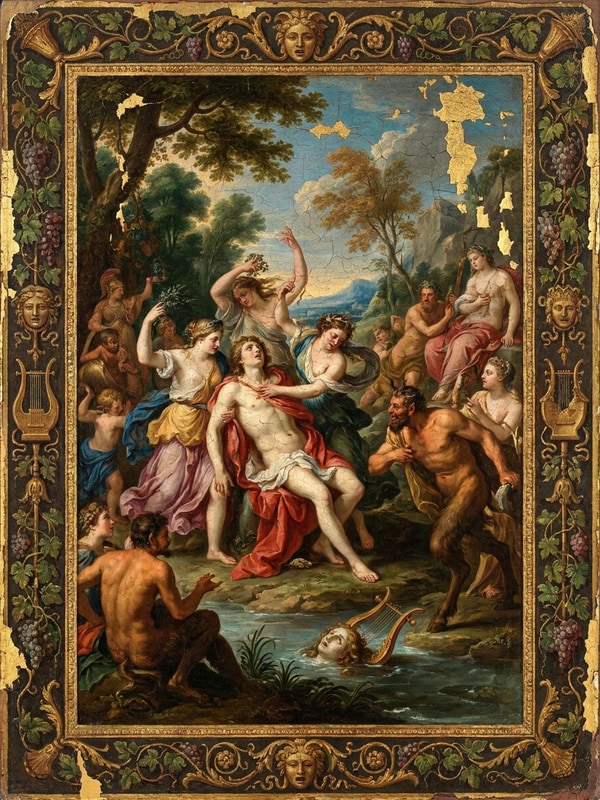
After losing Eurydice, Orpheus refused the love of the women of Thrace and wandered the hills and woods with only his lyre. In the frenzy of Dionysus’ rites, the angry women killed him; his head and lyre drifted away on the river, yet his song did not fall silent at once.
Article
Summary
Orpheus had once gone down into the Underworld, hoping to bring Eurydice back among the living, but near the edge of the darkness he looked behind him and lost her a second time. After returning to Thrace, he would not receive the love of other women, nor did he return to feasts, dances, or marriage. He wandered with his lyre through woods and along riverbanks, giving every song to his dead wife, while the women he refused turned shame into resentment. During a frenzied rite of Dionysus, women with loosened hair, animal skins, and ivy-wreathed staffs saw Orpheus playing alone near the river. Angered by his rejection and by the power of his music, they hurled stones and branches at him; at first the song weakened the missiles, and they fell harmlessly at his feet. But drums, cymbals, and Bacchic cries rose louder than the lyre, and then stones, staffs, hoes, and hunting spears struck him down. The singer who had moved the gods below died on a Thracian hillside. The women did not stop with his death. They tore his body apart and threw his head and lyre into the river Hebrus. The current carried them downstream; the lyre murmured against the water, and the head still seemed to call Eurydice’s name until the waves bore them near Lesbos. Nor did the killers escape punishment: Dionysus, angered that his rites had been stained with blood, rooted them into the earth and changed their arms into branches, leaving them as trees trembling in the wind. When Orpheus’ shade left the world of the living, it went once more to the Underworld. This time he was no longer alive, did not need to win a path with song, and did not need to fear looking back. He found Eurydice in the darkness and walked beside her through the meadows of the dead. The world remembered his music, his murder, and the relics carried by the river, but the reunion granted to him was not under the sun; it was a reunion in the realm where he could no longer lose her.
The Music in the Woods
After Orpheus returned from the Underworld, he seldom went into crowded towns.
Once, his music had made rowers forget their weariness. It had drawn wild beasts to lie quietly in the grass and made trees loosen their roots from the soil and move, little by little, toward him. But that time, when he carried his lyre through the shadows below the earth, he had almost brought Eurydice back to the world of light—only to turn and look behind him just before the threshold. After that single glance, his wife’s shade slipped back into the dark, and she could no longer walk beside him.
He came home to Thrace with the chill of the Underworld still clinging to him. The sun shone on the hillsides, the river flashed among the stones, and shepherds drove their flocks past him, but he seemed not to see them. He sat beneath the trees with the lyre across his knees. His fingers moved over the strings, and always he sang of the wife he had lost: of how the snake struck her in the grass, of how she had looked back at him on the road from the dead, silent and fading.
Many women heard him sing and came quietly near. Some brought garlands. Some waited for him by springs. Some looked toward his doorway at night. But Orpheus would not receive them. He did not go to feasts; he did not seek marriage; he did not join the dances at festivals. He gave himself over to music, as though, if he ever stopped, Eurydice’s name would vanish from the world.
The women he refused were ashamed at first. Then shame hardened into resentment. “He despises us,” they said. “He turns away from the living and sings every day to a shadow.” The words passed from cup to cup and through the darkness of night, growing fiercer as they went.
The Clamor on the Mountain of Dionysus
One day, in the mountains of Thrace, the rites of Dionysus were being celebrated.
The hills rang with hand-drums and bronze cymbals. Women ran through the woods with their hair unbound, animal skins over their shoulders, and ivy-wreathed staffs in their hands. They cried out the name of Dionysus as they rushed among the trees. Dust rose beneath their feet, torches swayed in the wind, and wine spilled over the stones, red as blood.
In the midst of that uproar, they saw Orpheus.
He was sitting not far away on the riverbank, with no guards and no companions beside him. Trees gathered around him, birds perched in the branches, and deer lifted their heads from behind the thickets. Even the river seemed to soften its voice as it ran over the stones. Orpheus bent over his lyre, and his song passed through the mountain wind, still calling for Eurydice.
One woman stopped and stared at him. “Look,” she said. “There is the man who will not even look at us.”
Another raised her thyrsus and cried, “His music makes everything obey him—everything except our grief.”
They pressed closer and closer. Someone picked up a stone from the ground and hurled it at him. The stone flew through the air, but when it met the sound of the lyre, it seemed suddenly to lose its force and fell harmlessly at his feet. Someone else broke off a branch and threw it; the branch too dropped lightly, as if it could not bear to interrupt the song.
Orpheus raised his head and saw their angry faces. He did not draw a sword. He did not flee. He only stilled the strings beneath his hand and tried to calm them with his singing. But on that day, his lyre was not the only sound in the mountains.
The cymbals clashed faster. The drums beat until the heart grew wild. The women screamed, and their frenzied cries drowned the strings. They stamped their feet and shook out their hair, as though caught in a wind no one could see. Stones and wooden staffs flew again, and this time the music did not stop them.
The first blow struck his shoulder. The second tore open his forehead. Then more stones, staffs, hoes, and hunting spears came down upon him. The birds that had listened to his song scattered in terror. The deer fled into the woods. Leaves were shaken loose and fell in showers. Orpheus’ lyre dropped to the ground; its strings were still trembling, giving out a thin, shivering sound.
The River Carries Away the Head and Lyre
The women could no longer hear any plea for mercy. They rushed upon Orpheus, surrounded him, and beat him down among the earth and fallen leaves. So the singer who had once moved the gods below died on a hillside in Thrace.
The mountain wind passed over the place, and the cries of frenzy slowly faded. On the ground there remained only broken branches, stones, blood, and the lyre stained with dust.
Still the women would not stop. They tore his body apart. According to the story, Orpheus’ head and lyre were thrown into the river Hebrus. The river received them and bore them downstream. The wood of the lyre touched the water and gave a low sound; the head turned among the waves, and its lips seemed still to call, “Eurydice.”
The shadows of the trees swayed along both banks, and even the fish beneath the water did not dare disturb the sound. It went on down the river, past reeds and sandbanks, until at last it reached the sea. The waves carried it near the island of Lesbos. People said that those who lived there later became especially gifted in song and lyre-playing because the relics of Orpheus had once rested on that shore.
As for the women who killed him, the story did not let them simply walk away. Ovid says that Dionysus, seeing his rites stained with blood, was filled with anger. He made the women’s feet sink into the earth. They tried to keep running, but their legs grew stiff; they stretched out their arms to beg for mercy, but bark and branches sprang from them. When the wind passed through the new trees, their leaves rustled as though they were still trembling from the madness of that day.
Reunion in the Dark
When Orpheus’ shade left the world of the living, it went once more toward the Underworld.
This time he was not alive. He did not need to use his song to beg for a path to be opened, and he did not need to fear turning back at the gate. The dim road stretched before his feet, and silent spirits passed beside him. He walked through places he had seen before, until at last he saw Eurydice.
She was still waiting in that shadowed realm. Orpheus went to her and held out his hand. Eurydice was not drawn back into the depths, nor did she dissolve like mist. Together they walked side by side through the meadows of the dead. Now he could turn and look at her—once, twice, as often as he wished—and he would not lose her again.
On the hillsides of Thrace, the music had fallen silent. The river still flowed on, and the trees still moved in the wind. But people remembered the singer: the man who had moved beasts, trees, and the lord of the dead with a single lyre, and who was killed by a furious crowd because he would not let go of his dead wife. In the end, he did not bring Eurydice back into the sunlight; but in the darkness, he found her again.