Greek Mythology
Styx — Greek Mythology
The Styx is a river of the Greek underworld and the sacred water by which the gods swear their most binding oaths. Its importance lies not only in its link to the realm of the dead, but also in the force of its oath, which even the gods cannot treat lightly.
Overview
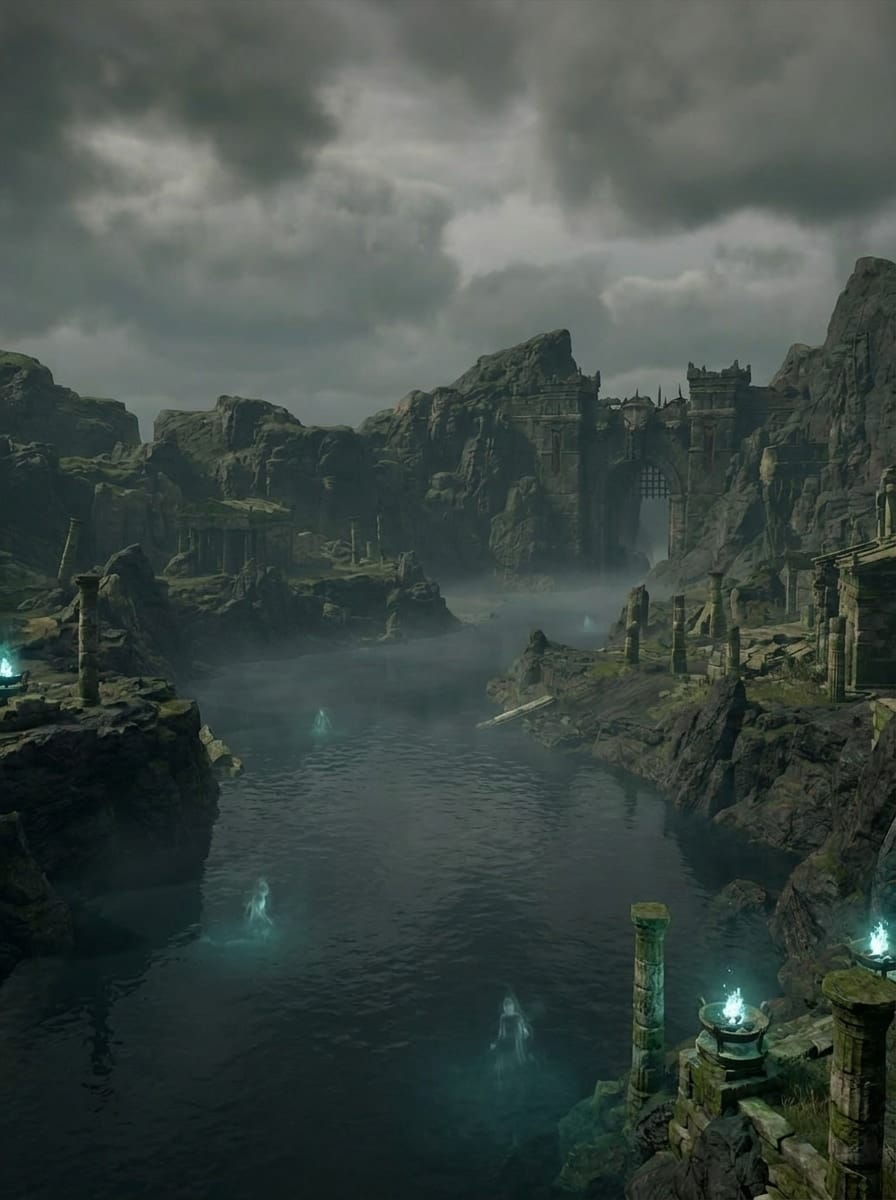
In mythic narrative, the Styx lies in the shadowed region leading to, or within, the underworld, where shades, the ferryman, and the road to the palace of Hades are closely connected with it. Hermes crosses the Styx on his way to the palace of Hades, and Orpheus also reaches the bank of this dark river on his journey through the underworld.
Article
Role in Greek Mythology
The Styx is both a river and a divine figure. In "The War of the Titans," the river goddess Styx is the first to bring her children to the side of Zeus; after his victory, Zeus honors her by making the gods swear by the water of the Styx. From then on, the Styx becomes the central guarantee of divine oaths, and once such an oath is spoken, it is treated in narrative as something that cannot simply be taken back.
The Styx is also a major river in the geography of the underworld. It appears on routes taken by living visitors or divine messengers entering the world below, and is often placed near dark waters, ferrying, the dead, and the palace of Hades. It is not the underworld as a whole, but one of the key rivers marking its roads and boundaries.
Geographical Background
The Styx belongs to the space of the underworld. In "The Abduction of Persephone," Hermes is sent by Zeus to the underworld; after crossing the Styx, he enters the palace of Hades. In "Orpheus and Eurydice," Orpheus descends to the crossing place of the dead, where Charon ferries souls across the Styx while they wait on the bank to pass to the other side.
Taken together, these narratives show that the Styx is usually understood in myth as both a river and a boundary on the road through the underworld. It connects the upper world with the realm ruled by Hades, and brings together the dead, the ferryman, and the route to the palace of the underworld god within a single mythic landscape.
Related Stories
"The War of the Titans" mentions this place: the river goddess Styx is the first to support Zeus, and Zeus later makes the gods swear by the water of the Styx, giving her an honored place among the gods.
"The Abduction of Persephone" mentions this place: when Hermes goes to the underworld to bring Persephone back, he crosses the Styx and enters the palace of Hades.
"Semele and the Birth of Dionysus" mentions this place: Zeus swears by the Styx to grant Semele's request, and once the oath has been spoken, he cannot easily go back on it.
"Phaethon" mentions this place: Helios swears by the Styx to grant Phaethon one wish, allowing Phaethon to ask to drive the sun chariot.
"Orpheus and Eurydice" mentions this place: Orpheus descends to the underworld and, beside the Styx, moves the ferryman Charon with his song, allowing him to continue toward the lord and queen of the dead.
"Phineus and the Harpies" mentions this place: Iris swears by the Styx that the Harpies will no longer return to snatch away Phineus' food.