Greek Mythology
Scamander River — Greek Mythology
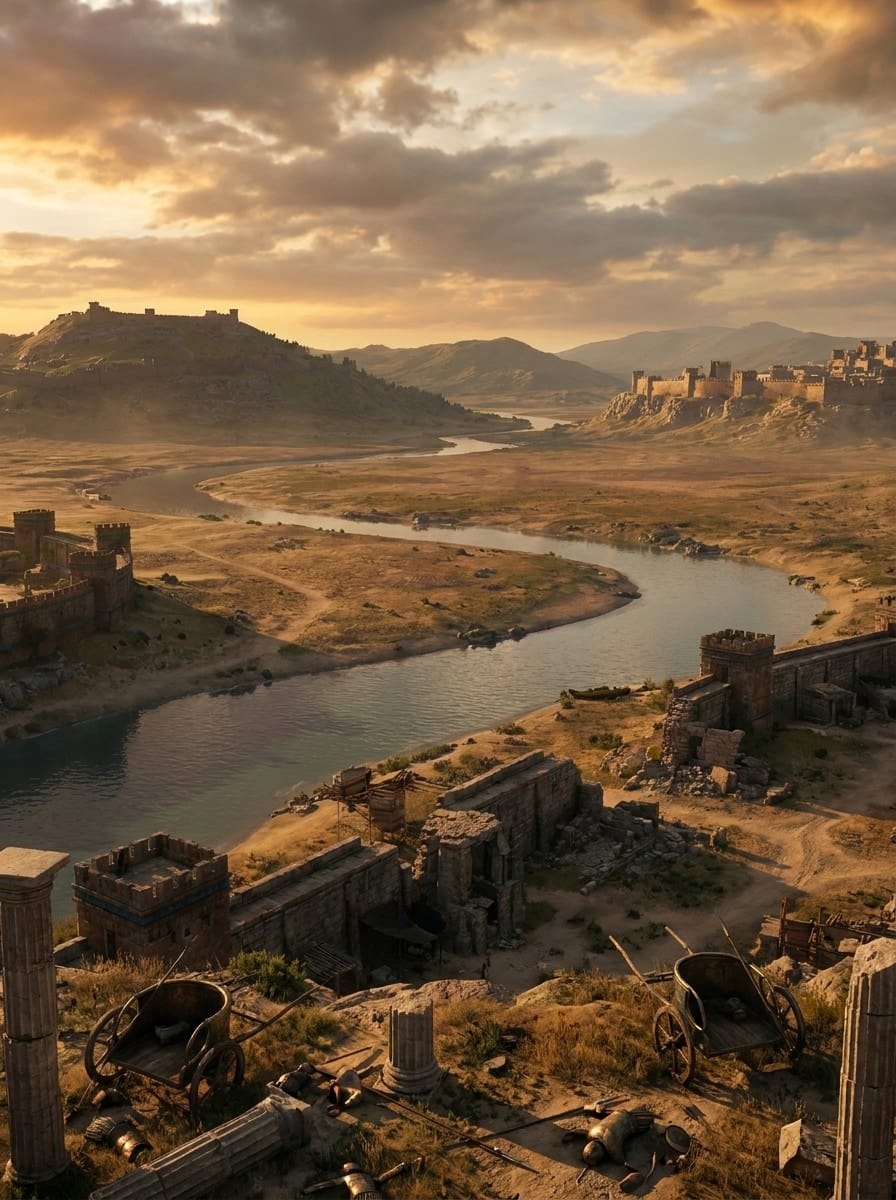
The Scamander River is one of the principal rivers in the geography of the Trojan War and an important landmark on the battlefield outside Troy. It is repeatedly associated with the Trojan plain, fighting beyond the city walls, and the war dead.
Overview
The Scamander River lies on the plain outside Troy, near the area where the Greeks and Trojans fought for years. In the story setting, the Greek camp stands by the sea, the Trojans have the high city at their back, and the river forms part of the battlefield and the Trojan plain beyond the walls.
Article
Role in Greek Mythology
In narratives of the Trojan War, the Scamander River is not a town or sanctuary in its own right, but part of the geography of battle. It marks the extent of the plain outside Troy and is often mentioned alongside the death and exhaustion caused by the long war.
The river belongs to the war zone between the city of Troy, its gates, the plain, the Greek ships, and the coast. Many battles take place on the plain outside the walls, and stories mention warriors falling beside the Scamander, making it an important site in the remembered casualties of the Trojan War.
Geographic Background
The Scamander River is closely tied to the Trojan plain. In the stories, the Trojans come out from the city to fight, while the Greeks advance from or retreat toward their seaside camp; the two sides struggle back and forth across the plain, before the gates, outside the ditch, and near the ships. The Scamander lies within this battlefield area.
In "Dolon and Rhesus," the Scamander River is also mentioned together with the grass of the Trojan plain. The story says that if Rhesus' horses are allowed to drink the waters of the Scamander and graze on the grass of Troy, the Greeks will find victory still harder to win. This shows that the river is not only a battlefield boundary or place name, but also part of the natural geography around Troy.
Related Stories
"Paris and Menelaus' Duel" mentions this place, setting the long fighting outside Troy against the background of the plain and the banks of the Scamander.
"The Trojans' Victory" mentions this place, using the fact that the Trojans are no longer driven back to the Scamander to show how far the battle line has advanced.
"Dolon and Rhesus" mentions this place, where the waters of the Scamander appear together with the grass of the Trojan plain in the account of Rhesus' white horses.
"The Wooden Horse" and "The Fall of Troy" mention this place, linking the deaths and exhaustion of the long siege with the battlefield beside the Scamander.