Greek Mythology
Pactolus River — Greek Mythology
The Pactolus River is a river in Greek mythology associated with the story of King Midas. Its significance lies chiefly in the episode in which Midas washes away the power to turn whatever he touches into gold, after which the river sand is said to have taken on a golden color.
Overview
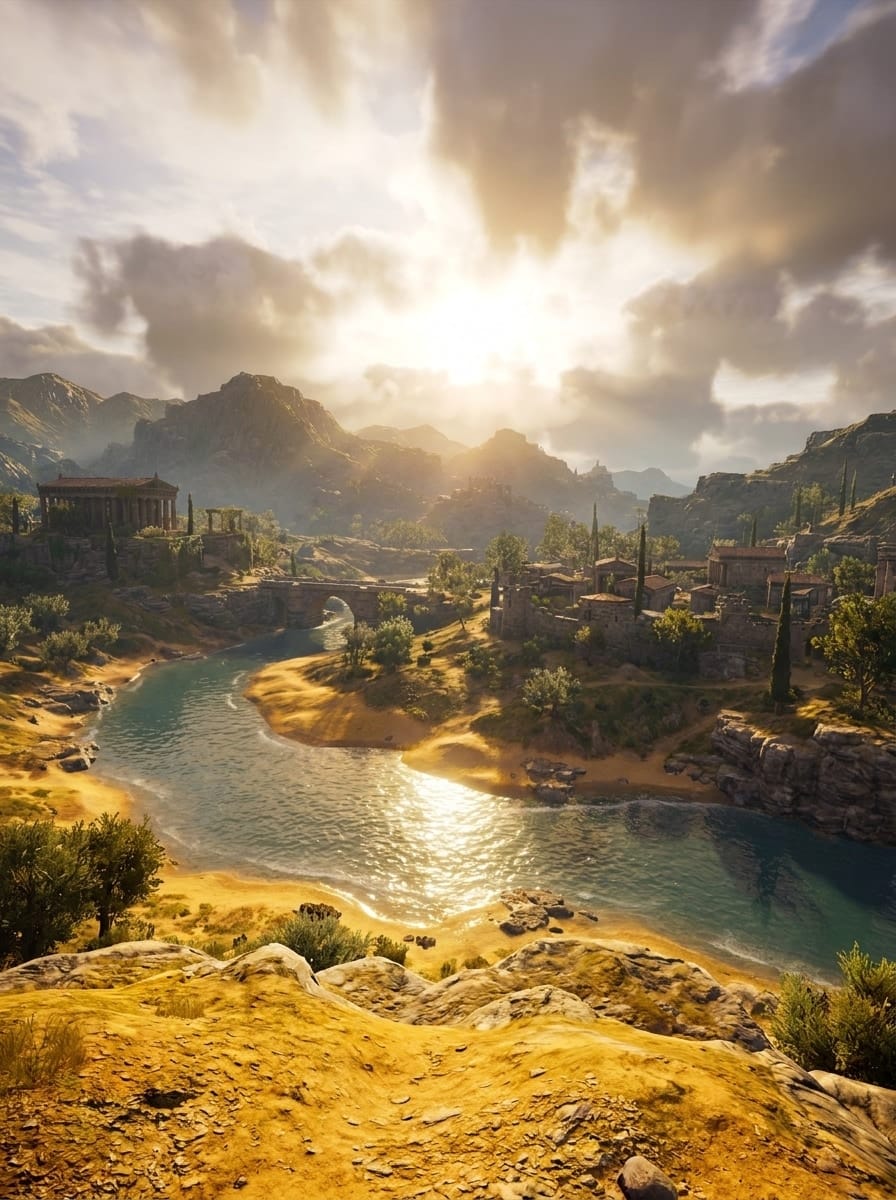
The story places the Pactolus River within the range of Midas's journey: following Dionysus's instructions, Midas goes to the river and follows its waters to the place where a clear stream rises. The riverbank in the narrative has clear water flowing among stones, grass along the banks, and shallow water suitable for entering and washing.
Article
Role in Greek Mythology
In the myth of Midas, the Pactolus River is not a divine dwelling or the center of a city-state, but the body of water where a god-given power is removed. Dionysus commands Midas to wash his head, body, and hands in the river, so that the power of turning things to gold leaves him. The river therefore becomes the place where Midas's punished greed is brought to an end and where he is allowed to escape disaster.
Geography and Natural Setting
The story describes the waters of the Pactolus as flowing among stones, with grass roots along the riverbank, and as cool, clear water that can be waded into. Midas bends down in the shallows to wash his hands, pours the water over his head, and drinks again from a stream that remains ordinary water. The narrative also links the golden color of the river sand to Midas washing away the golden power, making it the river's defining feature in mythic tradition.
Related Story
"King Midas" mentions this place: Dionysus sends Midas to the Pactolus River to wash away the power of turning things to gold. After Midas enters the water, he returns to normal, and the story explains that the river sand often showed a golden color thereafter.