Greek Mythology
Mysia — Greek Mythology
Mysia is a region in Greek mythology on the Asian coast, often appearing in heroic expedition stories as a shoreline where voyagers stray or make landfall. Its importance comes chiefly from the conflict between Telephus and the Greek army, and from the tradition of Hylas's disappearance during the Argonauts' journey.
Overview
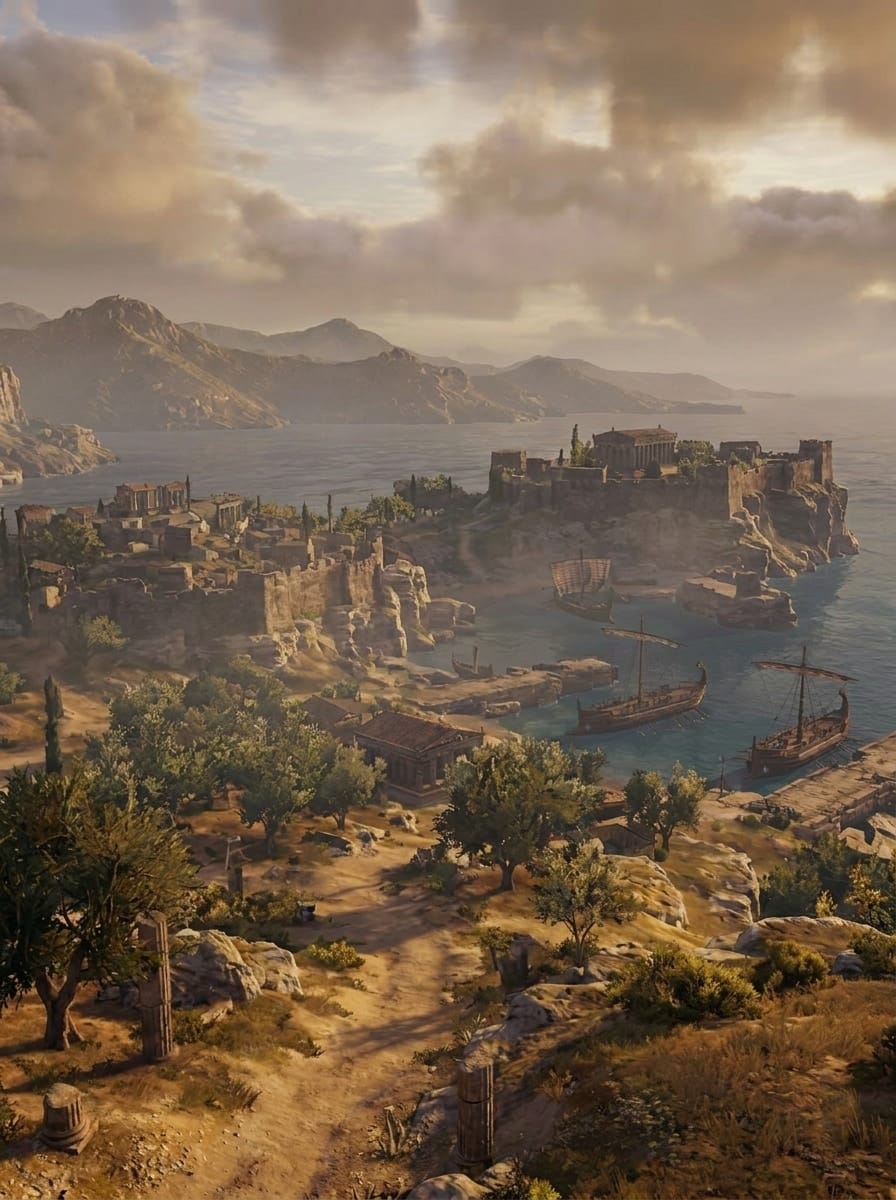
Mysia lies on the coastal stretch that Greek heroes would reach when sailing from the Aegean toward Asia, and in the stories it stands near the route leading to Troy. It is described as a region with bays, beaches, fields, pastures, towns, woods, hillsides, and springs rather than a single city or sanctuary.
Article
Role in Greek mythology
In traditions leading up to the Trojan War, Mysia is the place where the Greek forces first landed by mistake, thinking they had reached Troy. After they came ashore and plundered fields and livestock, they met resistance from the local king Telephus; that mistaken attack made Mysia a memorable site of early misdirection on the road to Troy.
In Argonaut tradition, Mysia is also the coastal place where the Argo put in temporarily. Heracles went ashore to cut replacement oars after one of the ship's oars broke, and Hylas disappeared near a spring; Heracles and Polyphemus were then left behind on the shore. In this setting, Mysia is not the destination but a stopping place that changes the make-up of the expedition.
Geographic background
In mythic geography, Mysia belongs to the Asian side of the coast. The Greeks assumed that landing on the Asian shore meant they were close to Troy, so they mistook Mysia for enemy land; Telephus later, knowing the local coast, river mouths, and roads, pointed them toward the real route to Troy.
When the Argo passed through Mysia, the narrative focuses on bays, wooded shorelines, hillsides, and springs. As a landfall on a sea route, it is linked to the wider voyage onward toward the straits and Colchis.
Geography and natural setting
In the related stories, Mysia combines coastal and inland scenery. The Trojan War tradition presents it with fields, pastures, and towns, enough to form a local society under a king; the coast itself is the place where foreign ships land, withdraw, and sail again.
In the story of Hylas, the Mysian shore includes beaches, woods, hillsides, and a spring. The wooded place around the spring is where Hylas went to draw water and was taken by a water nymph, while the nearby shore kept its role as the Argo's temporary anchorage.
Related stories
"The Greeks Mistake Mysia for Troy" mentions this place: the Greek army mistook Mysia for Troy's land and was resisted by King Telephus, who later showed them the road to Troy.
"Hylas Disappears and Heracles Is Left Behind" mentions this place: the Argo put in along the Mysian coast, Hylas disappeared at a spring, and Heracles and Polyphemus did not continue with the ship.