Greek Mythology
Mount Oeta — Greek Mythology
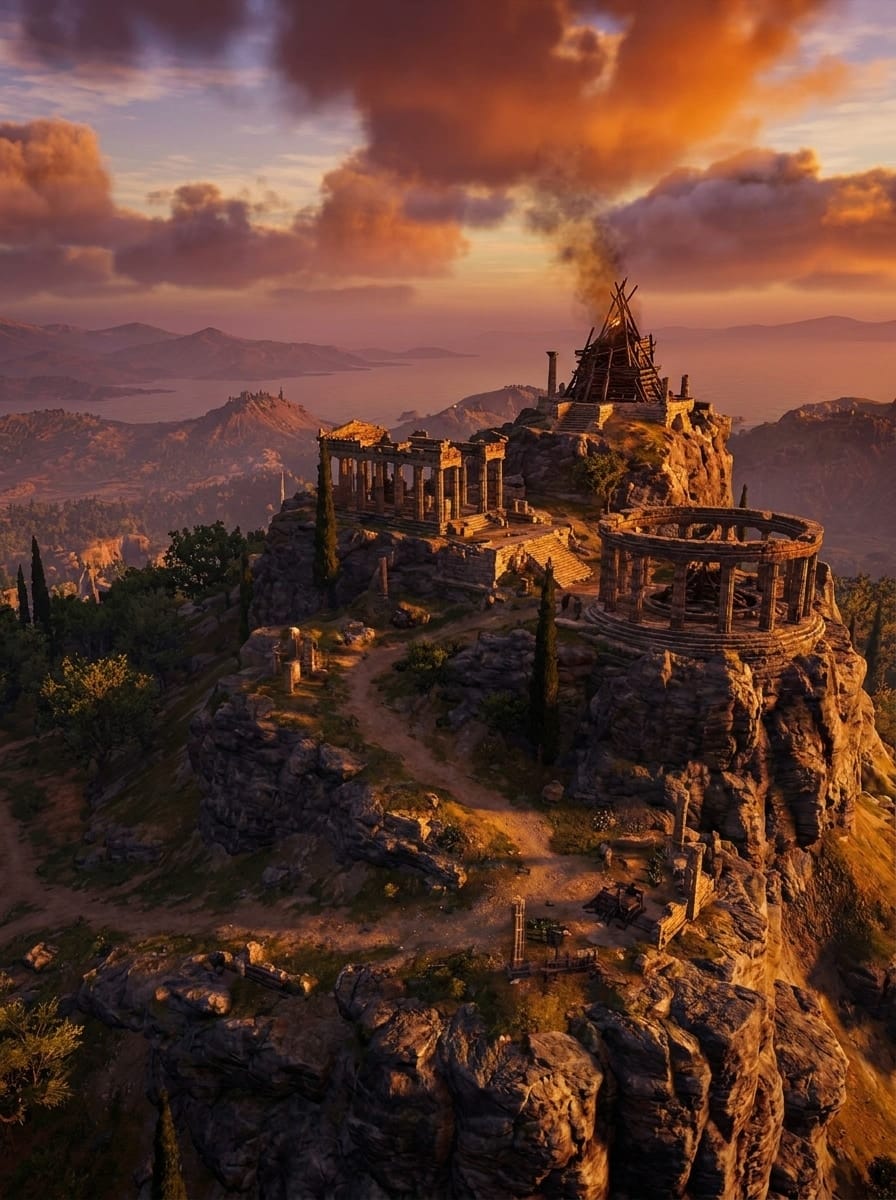
Mount Oeta is the mountain in Greek myth associated with the death and apotheosis of Heracles. Its importance comes chiefly from the tradition that the hero mounted his funeral pyre there, ended his mortal life, and was taken by the gods to Olympus.
Overview
Mount Oeta is the mountain to which Heracles is carried at the end of his life. The stories are less concerned with exact boundaries than with the mountain setting, its woods, the pyre, and the sacrificial fire that together form the scene of his death.
Article
Role in Greek Mythology
In the geography of Heracles' life, Mount Oeta belongs to the hero's final phase rather than to the places of the Twelve Labors. Deianira, misled by Nessus' dying words, sends Heracles a robe smeared with poisoned blood. When the poison takes effect, Heracles orders himself to be carried to Mount Oeta, where a pyre is built and fire consumes the mortal body that can no longer endure its pain.
The mountain also links death with divine elevation. In the story, what mortals see is the fire and smoke rising from the mountain; after the flames, Heracles' bones are gone, and the gods bring him to Olympus, where he joins the immortals.
Geography and Natural Setting
In the relevant narratives, Mount Oeta is a mountain that can be climbed, wooded, and used as the setting for a funeral pyre. Wind moves across the height, and pine branches and oak wood can be cut from the trees to build the pyre for Heracles. These natural details serve the scene: the slope, the woods, the pyre, and the flames together mark the place where Heracles' mortal life ends.
Related Stories
"Death and Apotheosis of Heracles" mentions this place: while tormented by the poisoned robe, Heracles orders himself to be carried to Mount Oeta and there mounts the pyre; after the flames, he is taken by the gods to Olympus.
"Later Deeds of Heracles" also refers to the fire on Mount Oeta, using it to summarize the end of Heracles' later wanderings, suffering, and final apotheosis.