Greek Mythology
Land of the Lotus-Eaters — Greek Mythology
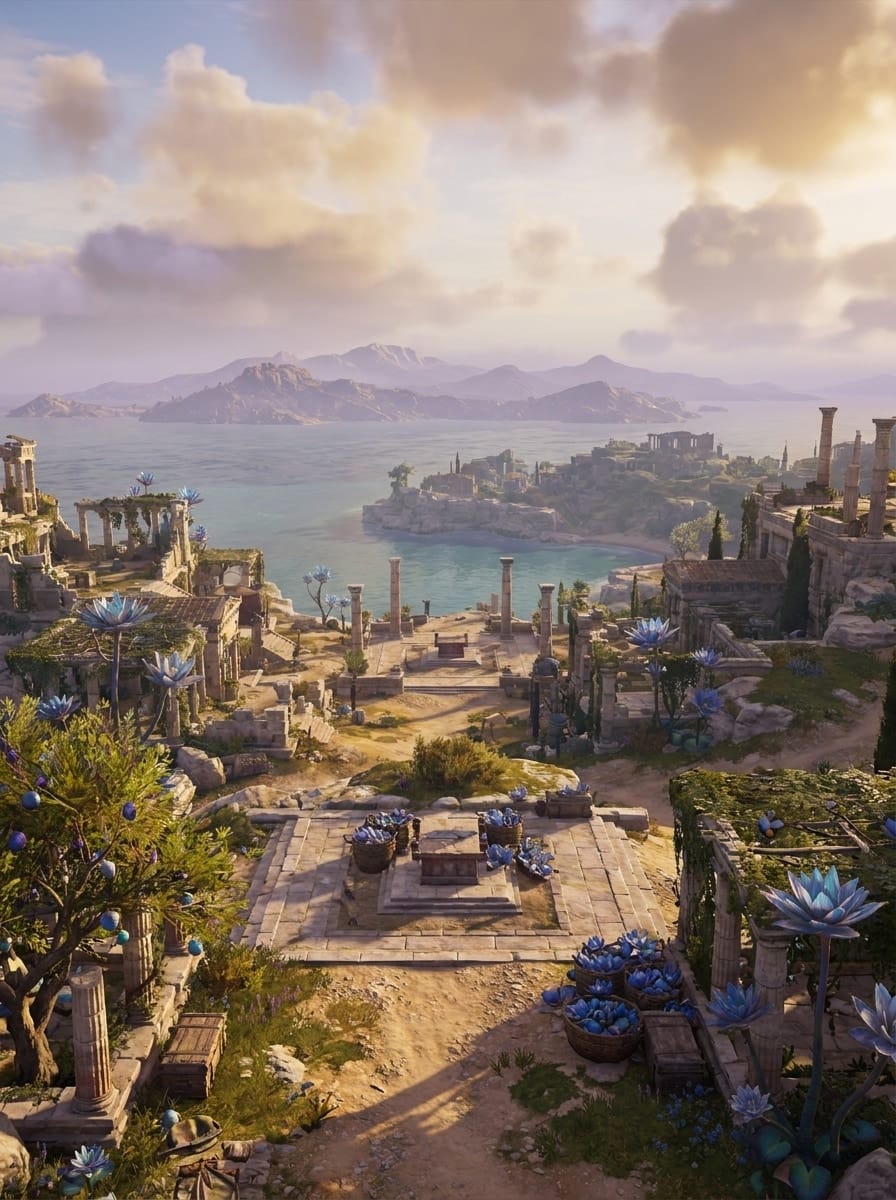
The Land of the Lotus-Eaters is an unfamiliar region reached by Odysseus during his voyage home, where the inhabitants offer visitors the lotus. Its importance lies in the way it weakens the will to return home not through force, but through forgetfulness and ease.
Overview
In the story, Odysseus' fleet leaves the coast of the Cicones and is driven off course by the north wind, drifting at sea for nine days and nights before reaching this land on the tenth day. The text presents it only as a mild, quiet place near the shore, with vegetation and fresh water available, and gives it no fixed real-world location.
Article
Role in Greek Mythology
The Land of the Lotus-Eaters is one of the early stops in the homeward geography of the Odyssey. It is not a battlefield, city-state, or divine sanctuary, but a marginal region where travelers may give up the desire to go home. The Lotus-Eaters do not attack the scouts sent by Odysseus; instead, they give them sweet fruit to eat. Those who taste it no longer wish to return to the ships or remember Ithaca.
Odysseus' role here is to preserve the direction of the voyage. When he realizes that his companions have lost the will to return home, he has them dragged back to the ships and tied beneath the rowing benches, then orders the fleet to leave the shore. The place therefore represents a nonviolent danger within the homecoming narrative: travelers may not be killed or captured, but may willingly forget their destination.
Geographical Background
The story provides only relative position and sailing context: the fleet first suffers a setback near Ismarus, among the Cicones, and is then driven from its course by storm winds before reaching the Land of the Lotus-Eaters after nine days adrift at sea. The place is coastal; Odysseus first lets his companions disembark to fetch water, then sends men inland to learn about the inhabitants.
The location remains deliberately vague in the narrative. It has a shore, fresh water, and an inland area where people live, but no named city, island, mountain or river boundary, or political affiliation. As a stop in the geography of the Odyssey, it is identified chiefly by the lotus and by the effect of making travelers forget the way home.
Related Story
"The Cicones and the Lotus-Eaters" mentions this place: after a storm, Odysseus' fleet reaches the land, and several companions eat the lotus and refuse to return to the ships. Odysseus eventually forces them back aboard, and the fleet continues toward the next stage of the homeward voyage.