Greek Mythology
Ithaca — Greek Mythology
Ithaca is the island kingdom of Odysseus in Greek mythology and the destination of the homecoming narrative in the *Odyssey*. Its importance comes chiefly from Odysseus' kingship, the palace where Penelope and Telemachus wait for him, and the restoration of peace on the island after the suitors are killed.
Overview
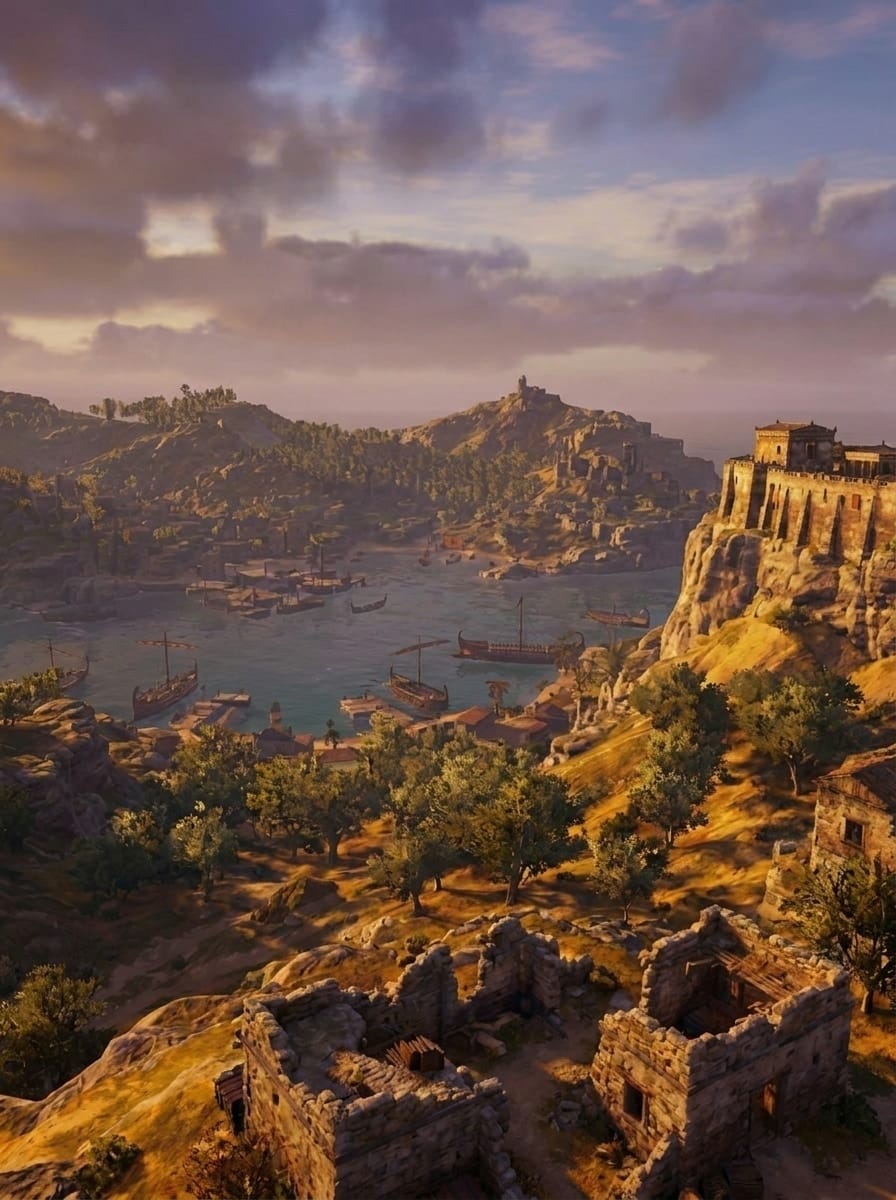
In the stories, Ithaca is a mountainous, rocky island, not especially broad, well suited to goat-herding and also containing valleys where grain and vines can be cultivated. When Odysseus returns home, a Phaeacian ship brings him to a quiet harbor on the island, near an olive tree and a cave sacred to the nymphs. The island also includes the royal palace, the assembly place, the swineherd's dwelling in the hills, and the country estate where Laertes lives.
Article
Role in Greek mythology
Ithaca is Odysseus' homeland and kingdom. In the tradition of the Trojan War, Odysseus sets out from here and joins the Greek coalition under the oath of Helen's suitors; in the homecoming tradition, it is the home he must reach after years of wandering at sea.
When Odysseus returns to Ithaca, he does not immediately enter the palace as king. Athena first covers the island in mist, so that he does not recognize his homeland at once, and then disguises him as a beggar. He is guided to seek out the loyal swineherd Eumaeus before revealing himself to Telemachus. Ithaca is therefore not only the goal of the voyage home, but also the place where disloyal servants, the suitors, the old kingship, and the order of the household are tested.
After the suitors are killed, Ithaca still faces a new internal conflict. The relatives of the dead gather in the assembly place, and some follow Eupeithes in seeking revenge against Odysseus. Odysseus, Telemachus, and Laertes meet them near the country estate. In the end, Athena, acting according to the will of Zeus, stops both sides, and the cycle of bloodshed on the island comes to an end.
Geography and natural setting
Ithaca is described as a small but famous sea island, with hillsides, rocks, rough mountain paths, and valleys. It is not a broad, fertile plain kingdom, but an island landscape shaped by mountains, herding, and limited farming.
The harbor where Odysseus is put ashore has calm water, an olive tree on the shore, and a nearby cave of the nymphs. Inside the cave are stone jars and basins, and bees pass in and out. Athena helps Odysseus hide the bronze goods, clothing, gold, and silver given to him by the Phaeacians in the cave, then seals the entrance with a great stone.
The island also contains several distinct social spaces. The palace is where the suitors consume Odysseus' estate and pressure Penelope to remarry; Eumaeus' pig farm lies in the countryside away from the palace; the assembly place is the public space where the Ithacans gather and debate revenge; and Laertes' farm and orchard stand outside the town in the rural district.
Related stories
"Odysseus Returns to Ithaca" mentions this place: the Phaeacians bring the sleeping Odysseus back to Ithaca, and Athena lifts the mist on the island and directs him first to the swineherd Eumaeus.
"Ithacan Revolt and Peace" mentions this place: after the suitors' deaths, the conflict among Ithacan families spreads from the palace to the assembly place and the country estate, until Athena brings it to a halt.
"The Greeks Gather and Send an Embassy" mentions this place: Odysseus, as king of Ithaca, is called into the Greek coalition and takes part in the mustering and embassy before the Trojan expedition.
"Nausicaa and the Phaeacians" mentions this place: in the Phaeacian palace, Odysseus says that he comes from Ithaca and eventually boards their ship to resume his journey home.
"The Cicones and the Lotus-Eaters" mentions this place: as Odysseus and his companions sail back from Troy, returning to Ithaca remains their goal, and the desire for homecoming runs through their wanderings at sea.