Greek Mythology
Erymanthus — Greek Mythology
Erymanthus is a mountain in Greek mythology associated with the labors of Heracles, best known as the haunt of the Erymanthian Boar. In the geography of Heracles’ adventures, it serves as the mountain setting for a task of hunting and capturing a dangerous animal alive.
Overview
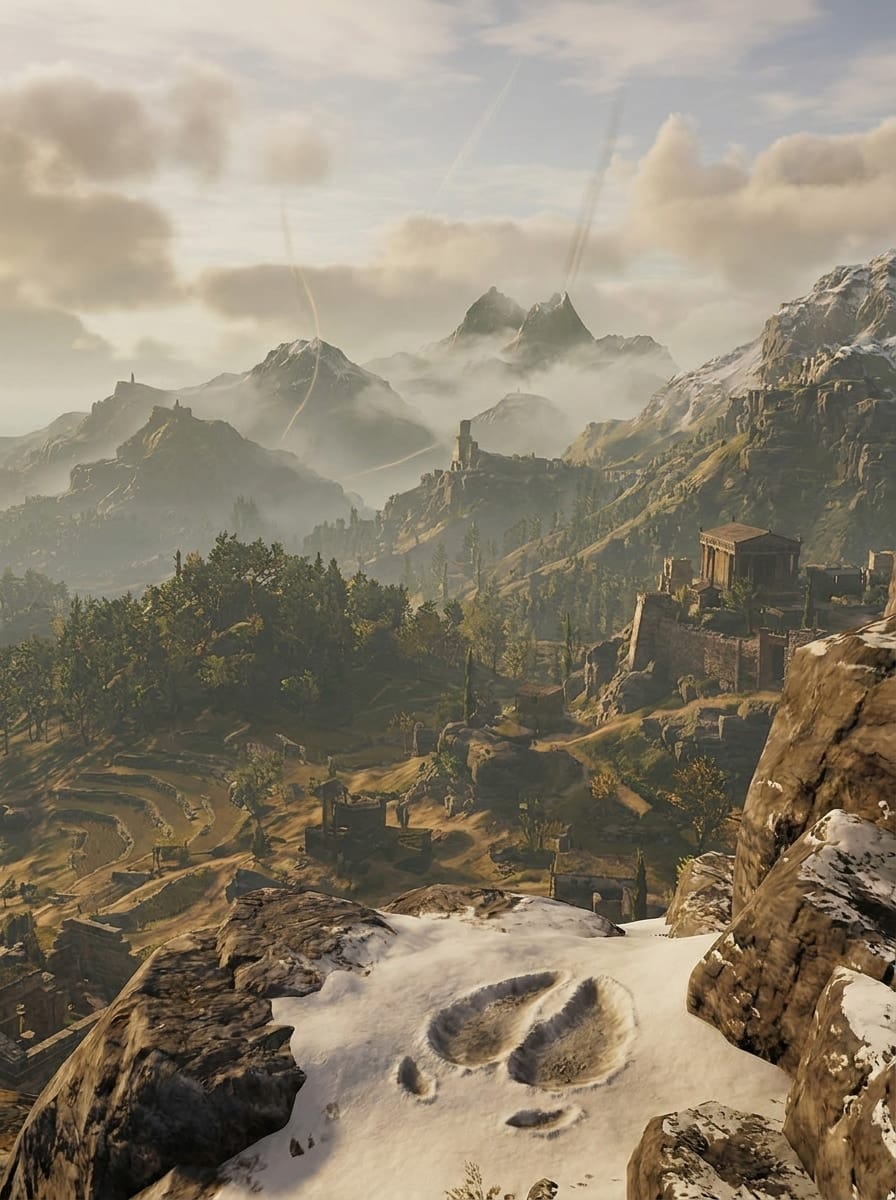
In the story, Mount Erymanthus lies in the region of Arcadia, with woodland, steep slopes, and deep winter snow. On his way there, Heracles passes the cave where the centaur Pholus lives, then continues into the mountains to track the boar.
Article
Role in Greek Mythology
Erymanthus appears in the tradition of Heracles’ labors as the mountain home of the wild boar. Eurystheus orders Heracles to capture the animal alive rather than kill it, making the mountain a place where the hero’s strength, endurance, and skill in capture are tested.
Geographic Background
The story presents Erymanthus as a mountain landscape near Arcadia. Its terrain includes trees, steep slopes, frozen ground, and snow; the boar’s trail is marked by churned-up earth, broken shrubs, and hoofprints across the snow.
Geography and Natural Setting
Within the story, Mount Erymanthus is covered in deep winter snow, and that snow becomes the terrain Heracles uses to catch the boar. The animal ranges through the mountains and is said to damage fields and frighten people and livestock; these details make Erymanthus an edge landscape of forested slopes and nearby farmland.
Related Stories
"The Ceryneian Hind and the Erymanthian Boar" mentions this place: Eurystheus orders Heracles to go to Mount Erymanthus and capture the boar alive. Heracles drives the boar into deep snow, waits until it is hindered by the terrain, then binds it and brings it back alive to Mycenae.