Greek Mythology
Eridanus — Greek Mythology
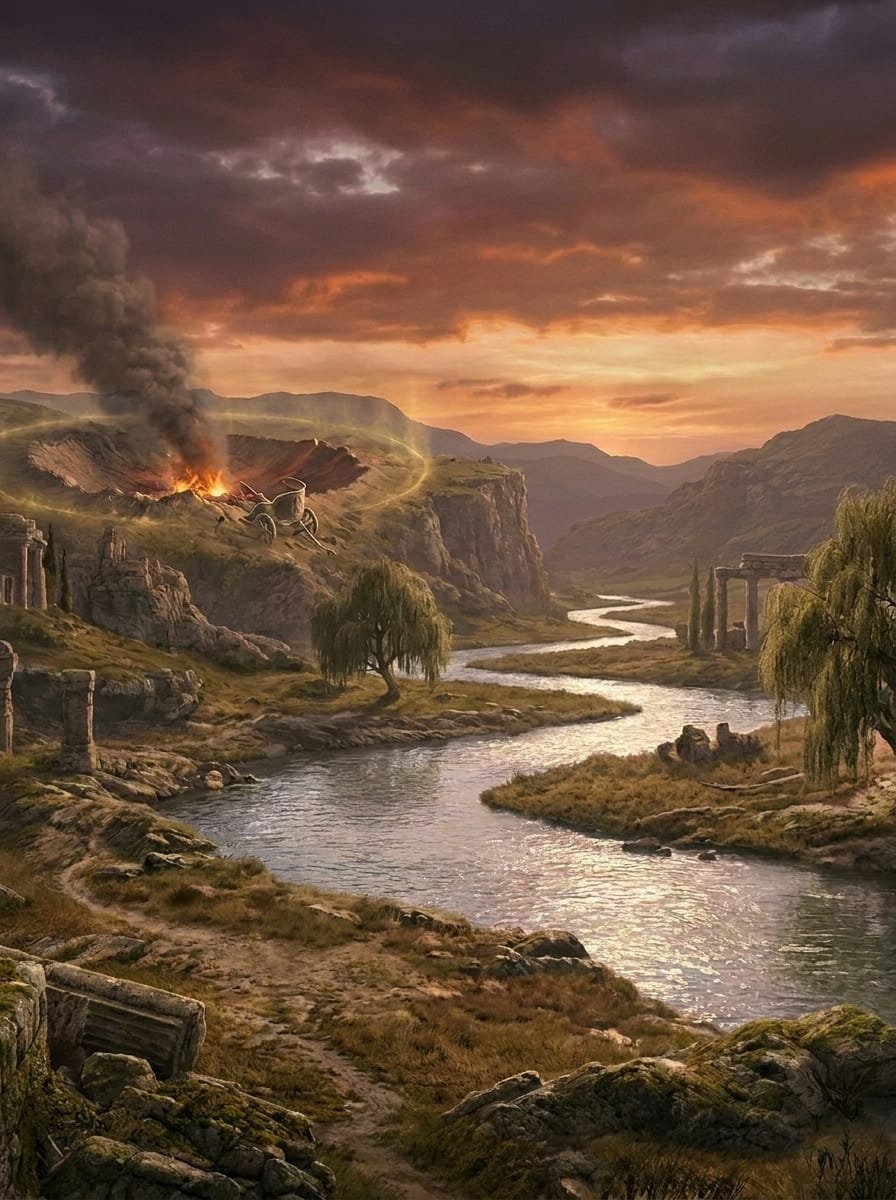
Eridanus is the river in Greek myth associated with Phaethon's fall and burial. Its importance comes chiefly from the aftermath of the runaway sun chariot, and from the mourning and transformations that take place along its banks.
Overview
Eridanus lies on the distant waterside where Phaethon fell from the sky. The story does not give it a precise earthly location, but presents it as the river and riverbank that receive Phaethon's body and hold his tomb.
Article
Role in Greek Mythology
In the story of Phaethon, Eridanus is the place where the catastrophe comes to rest. Phaethon fails to control the sun chariot of Helios, threatening sky and earth with fire; after Zeus strikes him with a thunderbolt, he falls from the chariot and lands by the river Eridanus. The river receives his body, and its bank becomes the place of burial and mourning.
Geographical Background
In the story, Eridanus is not used as a sailing route or a boundary between cities, but as the river where the fall, burial, and transformations occur. The spatial focus is on the water, the riverbank, and the tomb: the river nymphs pity Phaethon and bury him on the bank; the Heliades weep beside the grave and are later changed into poplar trees by the river; Cycnus also mourns on the water and near the bank, and is finally transformed into a swan.
Related Story
"The Story of Phaethon" mentions this place: after Phaethon is struck down by Zeus's thunderbolt, he falls beside the river Eridanus. His sisters, the Heliades, then lament on the riverbank and are changed into poplar trees, while their tears harden into amber.