Greek Mythology
Elysium — Greek Mythology
Elysium is the blessed afterlife in Greek myth, reserved for a select few favored by the gods, heroic figures, and—especially in later traditions—the righteous or purified dead. Depending on the source, it lies at the far edge of the earth or within the happier regions of the underworld, symbolizing peace, honor, and divine order beyond death.
Overview
Elysium is not a fixed place in real-world geography. Early Greek poetry often imagines it at the far western edge of the world, near the river Oceanus, beyond storm and hardship; later religious and literary traditions increasingly place it within the underworld as the serene dwelling of the blessed dead.
Article
Mythic Position
Elysium is one of the most important Greek visions of a blessed life after death. It is not the dim common destination of ordinary shades, but a place of peace reserved for a select few: heroes favored by the gods, figures bound to the divine by kinship, and, in later moralized traditions, those regarded as righteous, pious, or purified.
In this sense, Elysium reveals the complexity of Greek thought about death. Death did not automatically bring reward, and the underworld was not imagined merely as a place of punishment. Only a small number of mortals could pass beyond the usual human fate and enter a world untouched by labor, sickness, and war. Elysium therefore stands where heroic honor, divine favor, and hope for the afterlife meet.
Geography of the Imagination
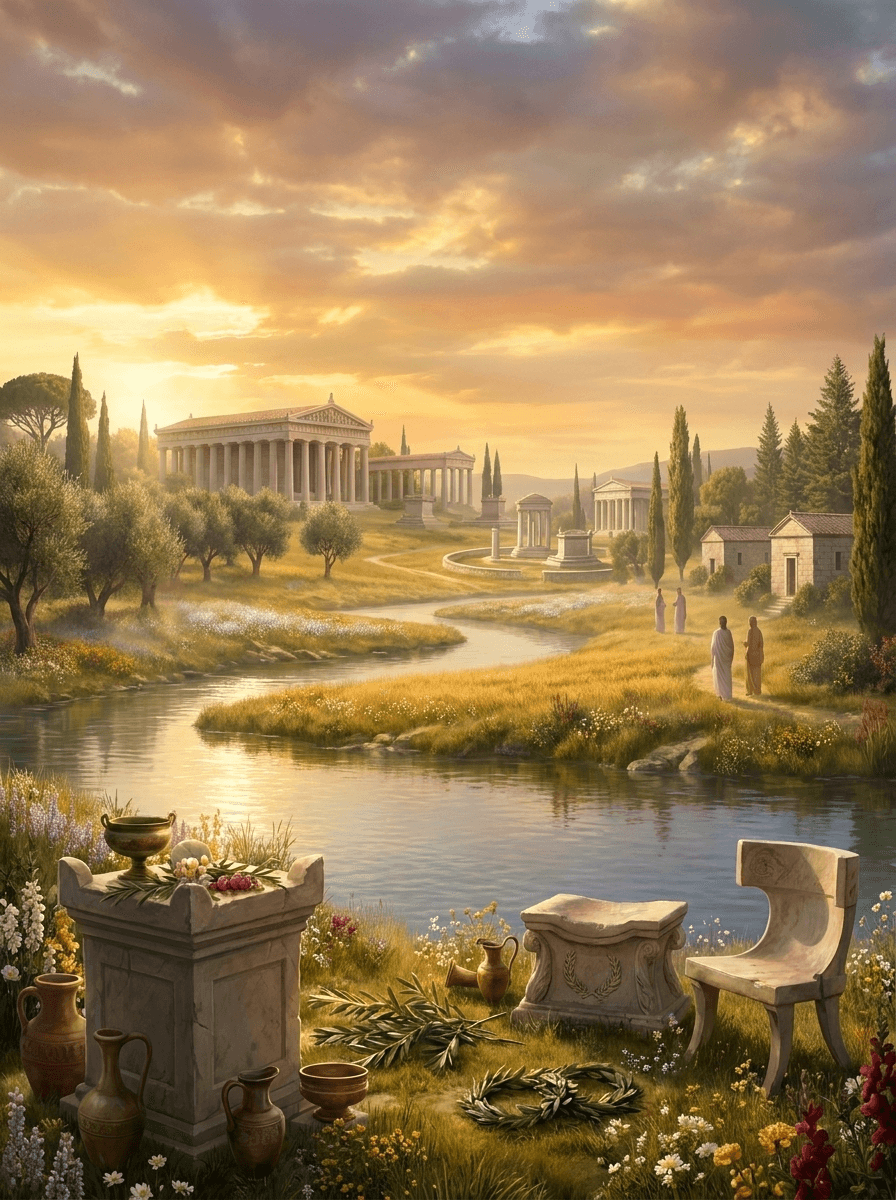
Early poetry does not present Elysium as an ordinary city or territory. It appears instead as a sacred landscape at the edge of the world. It is often placed in the distant west, near the encircling river Oceanus, far from the city-states, harbors, and battlefields of lived Greek experience, and far from the aging and toil that define mortal life.
This setting at the world’s boundary is essential. Elysium is not a place human beings may reach at will; it is a borderland set apart by divine power. Its climate is gentle, storms do not trouble it, and the earth yields abundance without harsh labor. It resembles an island and a divine precinct at once: part of the cosmic order, yet set at a distance from human history.
Images in Literary Tradition
In the Homeric tradition, Elysium first appears as the destination of a few exceptionally favored figures. It is not founded on a universal judgment of souls, but on a kind of divine privilege: certain people, because of birth, marriage, achievement, or divine will, are spared the ordinary end of mortals and led to a remote and peaceful realm.
The Hesiodic tradition develops this vision further by connecting it with the fate of the heroic age. In the image of the Isles of the Blessed, ancient heroes are settled far from sorrow, enjoying fertile land and quiet seasons. Elysium thus expands from the exceptional destiny of individuals into a space where heroic communities preserve their honor after death.
By the time of Pindar, Plato, and later Greek and Roman literature, the meaning of Elysium becomes increasingly ethical and religious. It is no longer only the result of heroic blood or divine preference; it may also be understood as the destination granted to souls after judgment, purification, or a just life. In Virgil’s Roman vision especially, Elysium becomes a luminous and solemn region within the underworld, sharply contrasted with darkness, punishment, and oblivion.
Relation to the Underworld
Elysium and the realm of Hades were not always the same idea. Earlier traditions often set Elysium at the edge of the earth, as though it stood apart from the shadowed dwelling of ordinary dead souls. Later literary and religious imagination more often folded it into the structure of the underworld, making it the blessed region within the world of the dead.
This development reflects the long evolution of Greek ideas about the afterlife. Epic poetry tends to emphasize heroic status and divine favor; later poetry, philosophy, and mystery traditions give greater weight to the soul’s character, purification, and posthumous judgment. Elysium therefore has several faces across the sources: it may be a paradise at the world’s edge, an island home for heroes, or bright fields within the underworld reserved for the good and the purified.
Symbolic Meaning
Elysium endured in Greek myth because it answered a fundamental question: if mortal life is brief, can heroic glory continue anywhere beyond the memory of song? The answer it gives is not simply consoling. Elysium never promises a blessed afterlife to all; it marks the distinctions created by divine choice, heroic identity, moral worth, or religious purification.
For that reason, Elysium is both gentle and severe. It contains meadows, clear air, abundance, and rest, but also an uncrossable threshold. It suggests that a brighter order may exist beyond death, while never removing the weight of fate, achievement, and sacred judgment.
Later Influence and Cultural Life
In later European literature, art, and religious imagination, Elysium became one of the enduring models for an ideal afterlife or blessed realm. Latin Elysium, paradisal imagery in Christian and Renaissance contexts, and modern poetic visions of peaceful rest all inherit or reshape this ancient idea in different ways.
Yet within Greek myth itself, the power of Elysium lies less in perfect heavenly bliss than in its sense of boundary. It stands beyond human experience, but not beyond Greek reflections on honor, lineage, divine will, judgment, and memory. It is therefore not a simple dream of happiness, but a mythic landscape in which Greek ideas of death, heroism, and cosmic order are gathered together.