Greek Mythology
Elis — Greek Mythology
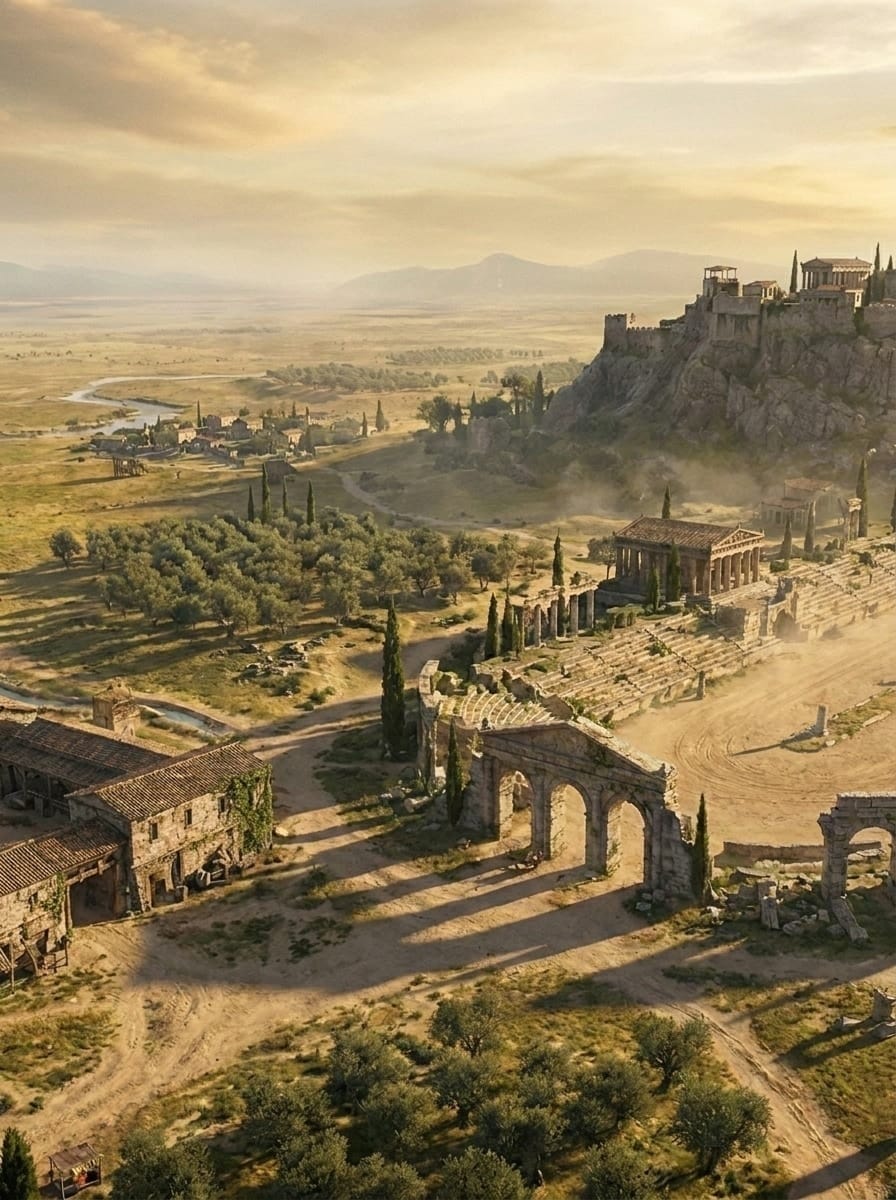
Elis is a region in Greek mythology that appears in stories of Pelops, Oenomaus, and Augeas as a setting for kingship, racing, and heroic labor. Its importance comes chiefly from the throne of Pisa, the chariot race for Hippodamia, and Heracles' cleansing of the Augean stables.
Overview
Elis lies within the Greek world, and Pisa is an important place in the Elis region. The stables of Augeas are also located in Elis, near the Alpheus and Peneus rivers, which Heracles diverts to wash out the stables during his labor.
Article
Role in Greek Mythology
In these stories, Elis is not a single city but a region containing a royal city, roads, stables, and rivers. Pelops comes to the region of Elis and competes at Pisa in the chariot race that Oenomaus set for the suitors of Hippodamia; after his victory, he gains the kingship and the land, bringing the region into the tradition of the house of Pelops.
In the story of Heracles' labors, Elis is also the realm of King Augeas. Augeas owns great herds and stables left uncleared for many years; Heracles comes here to complete the task of cleansing them and is later driven out of Elis after a dispute over payment.
Geographical Background
Elis is connected with Pisa, the stables of Augeas, the Alpheus, and the Peneus. Pisa, as the city ruled by Oenomaus, provides the setting for the suitor race and the transfer of kingship; the area of the stables is linked with rivers and redirectable water, forming the specific geography that allows Heracles to complete the labor.
Related Stories
"Pelops" mentions this place: after leaving Asia Minor, Pelops comes to the region of Elis, competes with Oenomaus in a chariot race at Pisa, marries Hippodamia, and gains the land.
"The Augean Stables and the Stymphalian Birds" mentions this place: Heracles, at the command of Eurystheus, travels to Elis to cleanse the stables of Augeas, which had not been cleaned for many years.
"The Suitors' Plot Against Telemachus" also mentions Elis: Noemon says that he has business in Elis, and therefore asks the suitors when the ship borrowed by Telemachus will be returned.