Greek Mythology
Aulis — Greek Mythology
Aulis is the coastal gathering place where the Greek coalition in the Trojan War tradition assembled, anchored, and waited to sail. Its importance centers on the fleet being held back by windless weather, the tradition of Iphigenia's sacrifice, and the formal departure of the Greek kings for war.
Overview
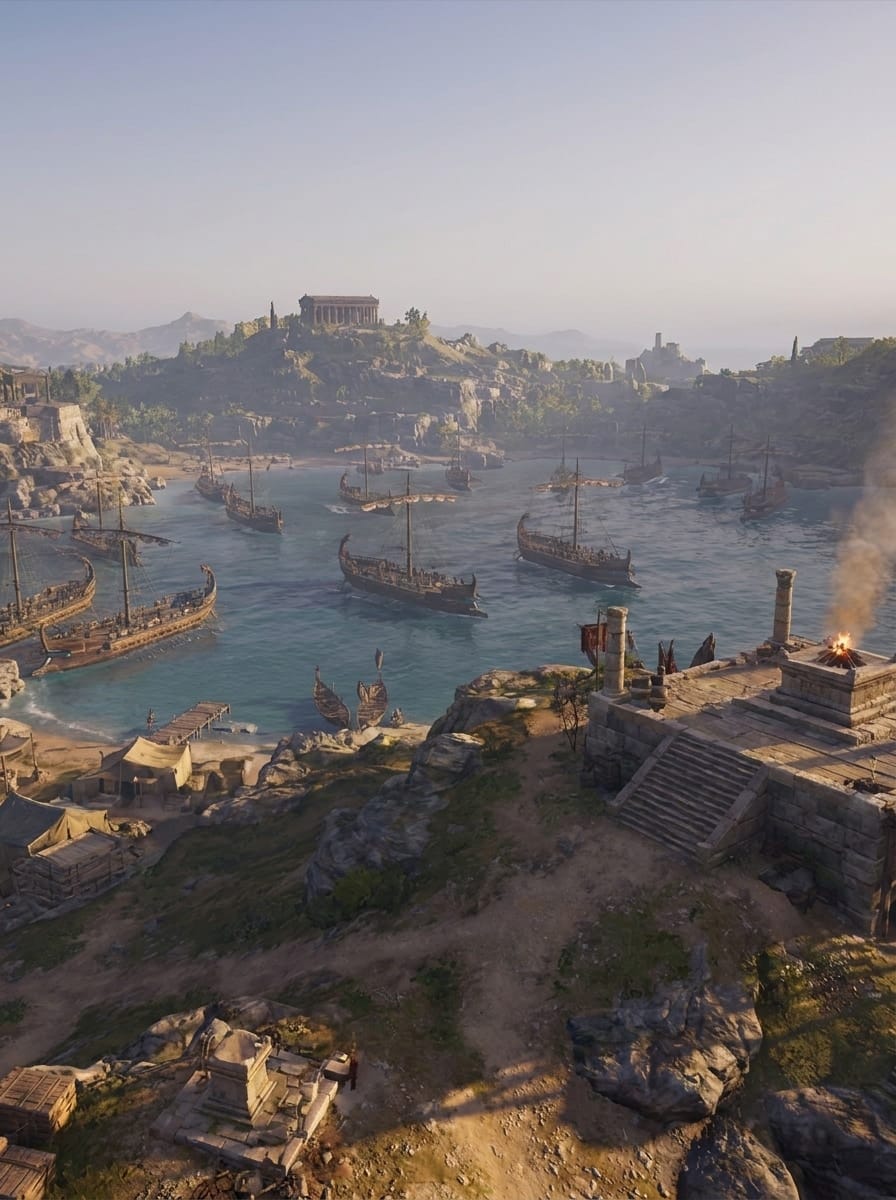
In the stories, Aulis appears as a coastal harbor and military shore, with the fleet lying in the bay, warriors encamped on land, and an altar near the camp. It stands at the maritime starting point from mainland Greece toward Troy, linking ships from many Greek communities with the later expedition route to the coast of Asia Minor.
Article
Role in Greek Mythology
Aulis is not presented chiefly as a walled city, royal palace, or temple site, but as the mustering shore of the Greek army before the Trojan War. Kings, heroes, and fleets from different regions gather there; Agamemnon, as commander, faces the expectations and pressure of the other rulers, while Menelaus waits for the expedition to recover Helen to begin.
In the Iphigenia tradition, Aulis becomes the place where divine will, military command, and family tragedy converge. The fleet cannot leave because there is no wind; the seer Calchas declares that Artemis is preventing the voyage; and Agamemnon is forced to confront the demand that he sacrifice his daughter Iphigenia. The story makes Aulis the place where the Greek side pays a price before the war has even reached Troy.
Geographic Background
Within the geography of the Trojan War, Aulis functions mainly as a point on the sea route. The stories repeatedly describe the bay, ships, masts, tents on the shore, an altar, and an army waiting for a favorable wind, showing that its role depends on coastal anchorage and sailing conditions. After leaving Aulis, the Greek fleet continues toward Troy, passing islands and straits before finally reaching the Trojan coast.
The place is also tied to routes of assembly across Greece. Leaders and warriors from Argos, Sparta, Pylos, Salamis, Crete, Ithaca, and other places are summoned there, making Aulis the common meeting point after the oath of Helen's suitors is put into effect.
Related Stories
"Iphigenia at Aulis" mentions this place: the Greek coalition is trapped in the bay of Aulis for lack of wind, and Agamemnon is required to give up Iphigenia in exchange for the fleet's departure.
"The Greeks Gather and Send an Embassy" mentions this place: heroes from many regions bring ships to Aulis according to their oath, and before the expedition sails, Menelaus and Odysseus are sent to Troy to negotiate.
"Achilles on Skyros" mentions this place: the Greek leaders have already gathered around Aulis, so Odysseus must find Achilles, who has been hidden on Skyros.
"The Greeks Arrive at Troy" mentions this place: the Greek fleet sails from Aulis toward Troy and begins its landing operation after arrival.
"Agamemnon Tests the Greeks" mentions this place: while urging the army outside Troy, Odysseus recalls the omen the Greeks saw when they first gathered at Aulis.
"The Death of Agamemnon" mentions this place: Clytemnestra treats Agamemnon's sacrifice of Iphigenia at Aulis for the sake of the voyage as a central reason for revenge.