Greek Mythology
Augean Stables — Greek Mythology
The Augean Stables are the stable grounds where Augeas, king of Elis, kept his cattle in Greek myth, and they form the setting of one of the Twelve Labors of Heracles. Their importance lies in Heracles' solution: he completed the supposedly impossible one-day cleaning by diverting river water through the stables.
Overview
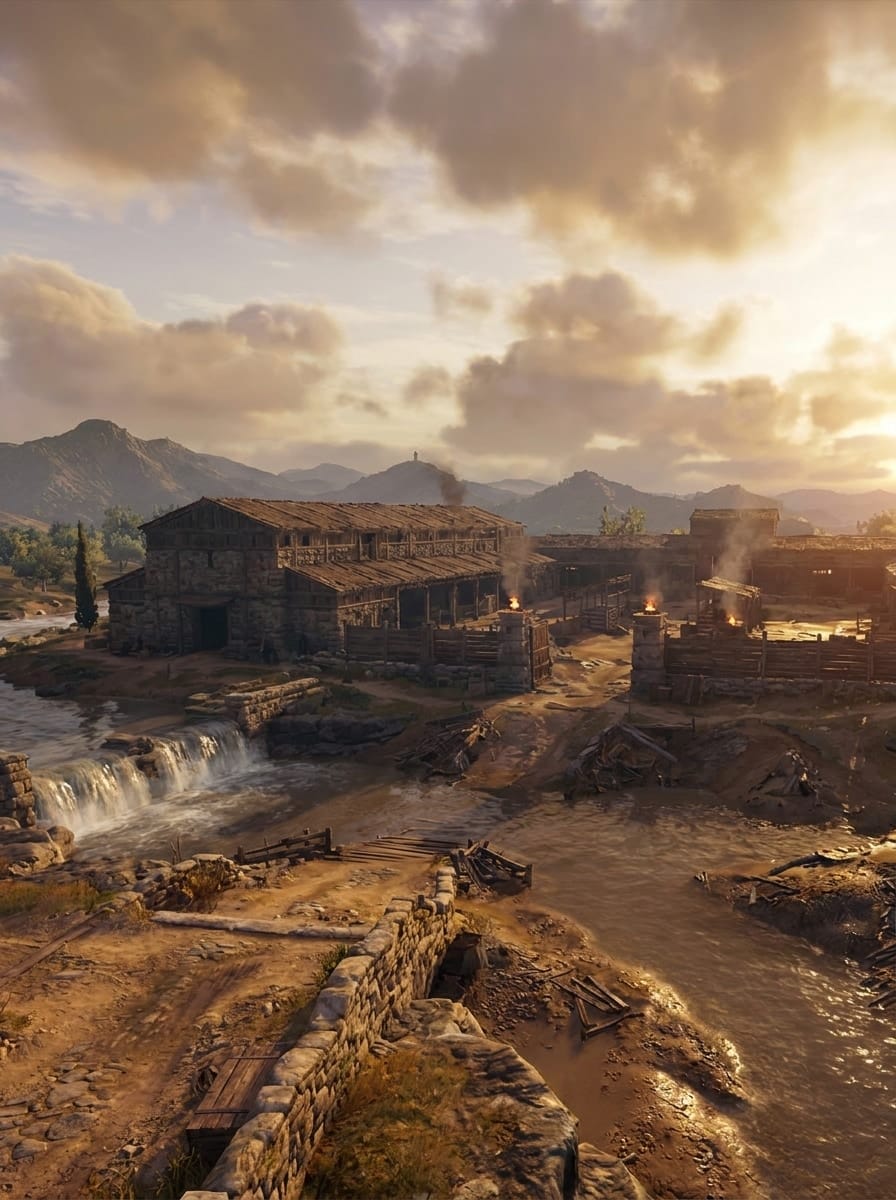
The stables are set in Elis, within the realm of Augeas. The story places the Alpheus and Peneus rivers nearby, and Heracles uses the currents of both rivers to wash out the stable buildings.
Article
Role in Greek Mythology
In the tradition of Heracles' labors, the Augean Stables are not a battlefield but a place that tests the hero's ingenuity and practical execution. Eurystheus sends Heracles to Elis to clean stables that have gone uncleaned for many years, intending the filthy, heavy, and undignified task as a humiliation.
Heracles does not carry the manure away by hand. Instead, he studies the ground and the nearby watercourses, cuts channels, and sends the Alpheus and Peneus rivers through the stables. After the task is finished, Augeas refuses to pay the reward he had promised, and Eurystheus also refuses to count the labor as valid because Heracles had asked for payment.
Geographic Background
The story locates the Augean Stables in Elis and connects them with two nearby rivers. The stables themselves are the cattle-keeping area of Augeas, while the surrounding terrain and waterways matter directly to the narrative: once diverted, the rivers become the force that cleans the stables.
Related Stories
"The Augean Stables and the Stymphalian Birds" mentions this place: Heracles, acting under Eurystheus' command, comes to Elis to clean the long-fouled stables of Augeas and completes the task with the help of the Alpheus and Peneus rivers.