Greek Mythology
Achelous River — Greek Mythology
The Achelous River is a river in Greek mythology that shares its name with the river god, and it plays an important role in traditions about Alcmaeon's exile and purification. It is both a body of water and a boundary place where newly formed land, ritual cleansing, and marriage ties meet.
Overview
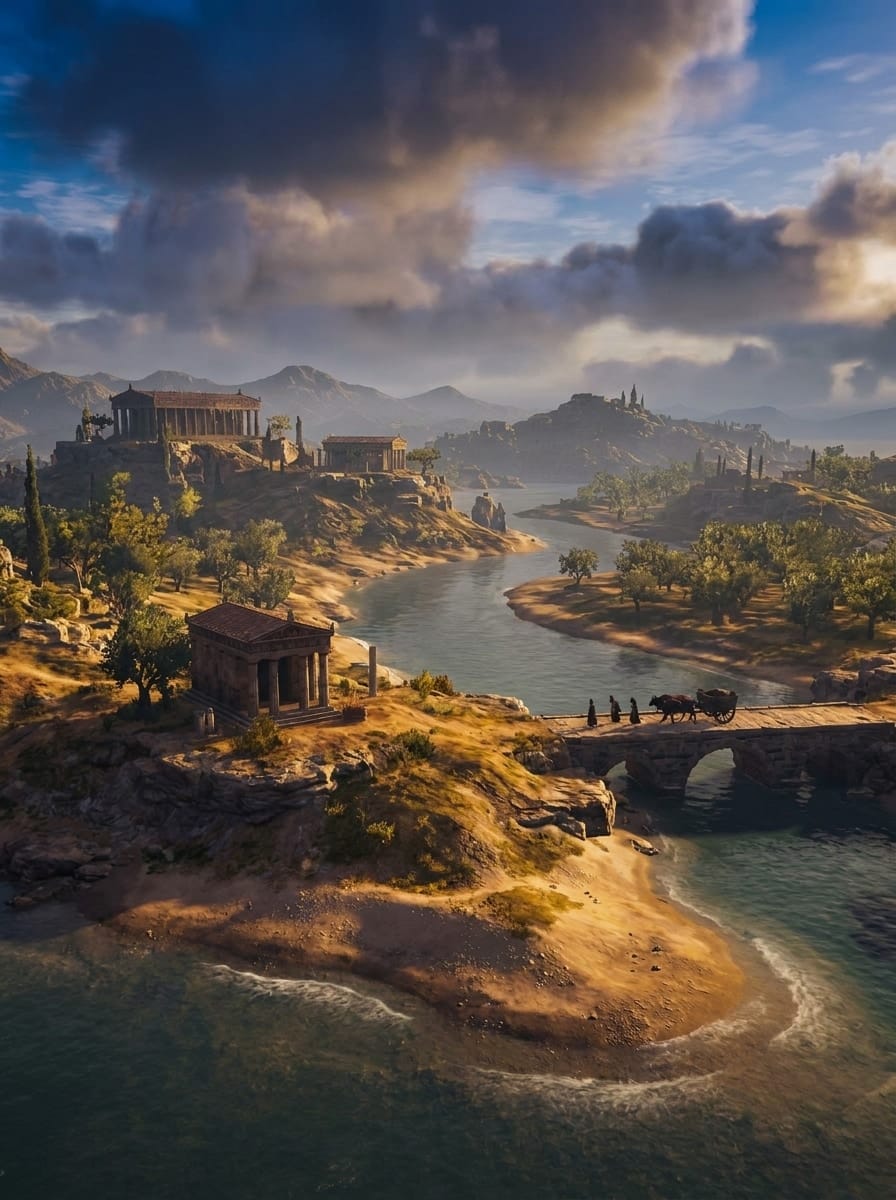
In "Alcmaeon and the Necklace," the Achelous River lies along the riverbank reached by Alcmaeon during his wanderings. The story describes its winding channel, wet mud and reeds along the banks, and new land formed at its mouth by the buildup of silt.
Article
Role in Greek Mythology
In the story of Alcmaeon, the Achelous River chiefly serves as a place of purification and refuge. After killing his mother, Alcmaeon is pursued by the Furies; although he is first purified at Psophis, crop failure still prevents him from settling there. An oracle tells him to live on land that came into being only after the matricide, so he comes to the banks of the Achelous. The river god receives him and purifies him again, allowing him to remain for a time on land recently made by the river's waters.
Geography and Natural Setting
The Achelous River in the story is not merely a background stream, but is tied to newly formed land at its mouth. Year after year, the river carries silt and builds up fresh soil where it enters the sea; the narrative treats this soil as ground that had not borne Alcmaeon's earlier guilt. The wet mud, reeds, and river-mouth deposits together define the place's geography within the story.
Related Stories
"Alcmaeon and the Necklace" mentions this place: after killing his mother, Alcmaeon goes into exile and reaches the Achelous River, where the river god accepts him and purifies him again. Later, the river god gives him his daughter Callirrhoe in marriage; when Callirrhoe asks for the necklace and robe of Harmonia, Alcmaeon returns to Psophis and is eventually ambushed and killed by the sons of Phegeus.