Greek Mythology
Odysseus — Greek Mythology
The Cunning King of Ithaca and Hero of Homecoming
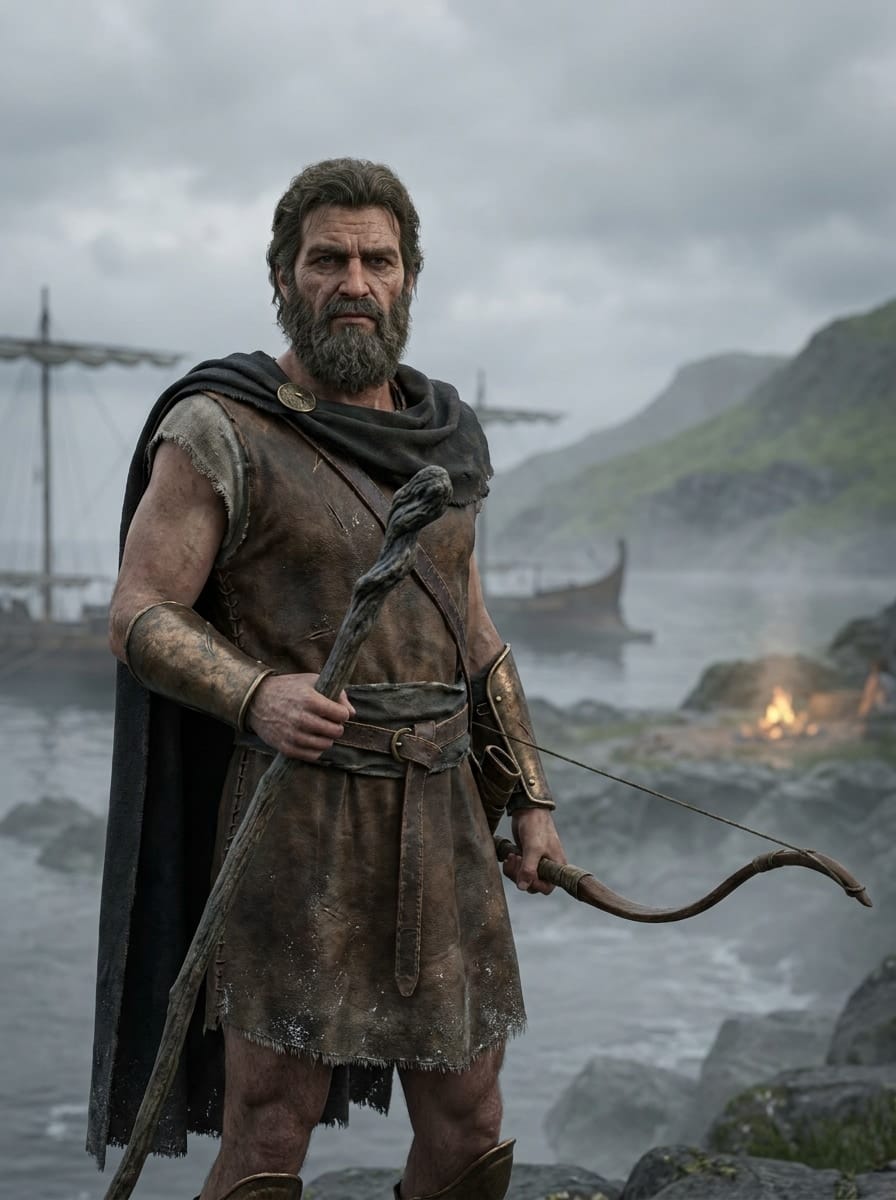
Odysseus is the king of Ithaca and the wandering hero after the Trojan War, famed for his wit, endurance, disguises, and fierce will to return home. He refuses the immortality promised by Calypso, passes through the underworld and disasters at sea, and, with Athena’s help, returns to his homeland in disguise. There he endures humiliation, tests loyalty, and finally joins forces with Telemachus to kill the suitors and reclaim his household and marriage bed.
Domain
Homecoming, Cunning, Seafaring Wandering, Kingship of Ithaca, Endurance, Revenge, Family Loyalty
Symbols
Great bow, Olive-tree marriage bed, Wooden staff, Tattered pouch, Black ship, Shore, Pit of blood, Oar, Rocky hills of Ithaca, Argos
Article
Origins and Lineage
Odysseus is the king of Ithaca, the son of Laertes, the husband of Penelope, and the father of Telemachus. When he left Ithaca, Telemachus was still an infant; by the time he returned, his son had grown into a young man capable of planning revenge at his side. Odysseus’s family identity is not merely background, but the center of everything he does: he suffers at sea, rejects the goddess’s cave, and endures the humiliation of a beggar all so that he can return to that poor but beloved island, to his wife, his son, and his aged father.
Divine Role and Attributes
Odysseus is not a god, but one of the most important mortal heroes in Greek mythology. His strength does not lie in an invincible body, but in being “of many devices”: he can tell stories, endure insult, read a situation, and act swiftly when the moment comes. Athena especially favors him because she sees his intelligence and self-control; Poseidon, however, hates him for blinding the Cyclops Polyphemus, and turns his journey home into a long punishment. Odysseus’s heroism is always marked by contradiction: he can long for home with deep feeling, yet take cold revenge; he can honor the laws of hospitality, yet lie to test others; he can weep by the sea, yet in the hall hold down his anger like a stone sunk in water.
Major Myths
After the Trojan War ended, Odysseus did not return home safely like many Greek heroes. He lost his ships and companions at sea, and at last drifted alone to Ogygia, the island where Calypso lived. Calypso loved him, sheltered him, and promised to make him ageless and deathless; but Odysseus sat day after day by the shore looking toward home, preferring suffering, old age, and death in Ithaca to trading away his household for immortality. At last the gods ordered Hermes to deliver their command, and only then did Calypso let him go.
Guided by Circe, Odysseus also sailed to the edge of Ocean and made offerings at the entrance to the underworld to summon the dead. Sword in hand, he guarded the pit of blood. First he promised his dead companion Elpenor a proper burial, then listened as the prophet Tiresias foretold Poseidon’s anger, the taboo of Helios’s cattle, and the vengeance that would follow his return home. He saw his dead mother Anticleia and learned that she had died of longing for her son; when he tried to embrace her, he clasped only an empty shade. The ghosts of Agamemnon, Achilles, Ajax the Greater, and others also showed him the bitterness and old grudges hidden behind heroic glory.
The Phaeacians finally carried Odysseus back to Ithaca. He slept aboard ship and was set down on the shore of his homeland; when he woke, Athena’s mist kept him from recognizing the land at once, so he first counted his goods and wondered whether he had been deceived again. Athena, disguised as a young shepherd, tested him, and he immediately answered with a false identity of his own, until the goddess revealed herself. Then she changed him into a ragged old man and sent him first to seek shelter with the loyal swineherd Eumaeus.
In Eumaeus’s hut, Odysseus heard the old servant’s loyalty to his master, and with Athena’s help he was reunited with Telemachus. After father and son wept, they quickly restrained their grief and began planning how to deal with the suitors in the palace. Disguised as a beggar, Odysseus entered his own royal hall, endured Melanthius’s kicks, Antinous’s insults and attack with a footstool, and saw with his own eyes how the suitors were devouring his estate. Even when his old dog Argos recognized him by the dung heap and died, he could only hide his tears and keep walking.
The moment for revenge came from the great bow Penelope brought out. None of the suitors could string it, but Odysseus bent it easily and shot an arrow through twelve axe heads. Then he cast off his disguise, shot Antinous first, and refused Eurymachus’s offer of compensation in exchange for his life. Together with Telemachus and the loyal servants, he cleansed the hall. After the vengeance, he still had to face Penelope’s careful test: only when he described the secret of the immovable marriage bed made from the root of an olive tree did husband and wife truly recognize one another. Later he went into the countryside to see Laertes, first testing his father with lies, then proving himself through his scar and memories of the orchard trees from his childhood. Only when Athena stopped the revenge of the suitors’ kin did Ithaca become calm again.
Worship and Influence
In ancient Greek tradition, Odysseus represents homecoming and the hero of intelligence. Unlike Achilles, who defines himself through brief, dazzling battlefield glory, Odysseus reveals his heroic worth through long wandering, disguise, endurance, and the rebuilding of a household. The Odyssey binds his name to sea roads, testing, storytelling power, and moral complexity: he is both victim and schemer; guest and disguised master; a husband and father longing for peace, and a revenger capable of leaving the hall running with blood.
Character Overview
Odysseus’s sharpest trait is clear-sightedness. He rarely takes the first person he meets for a friend, and he does not lightly hand his true name to an unfamiliar shore. He loves his home, but he is not simply gentle; he can weep, remember hearth smoke, the marriage bed, and his father’s orchard, but he can also invent lies, conceal his identity, and wait for his enemies to expose their weaknesses. His heroism comes from a difficult balance: surviving between divine anger and human betrayal, preserving strength in humiliation, and still confirming the truth before accepting reunion. For him, homecoming is not the end of the story, but an order that must be won back through wisdom, blood, and memory.