Greek Mythology
Wings of Daedalus and Icarus — Greek Mythology
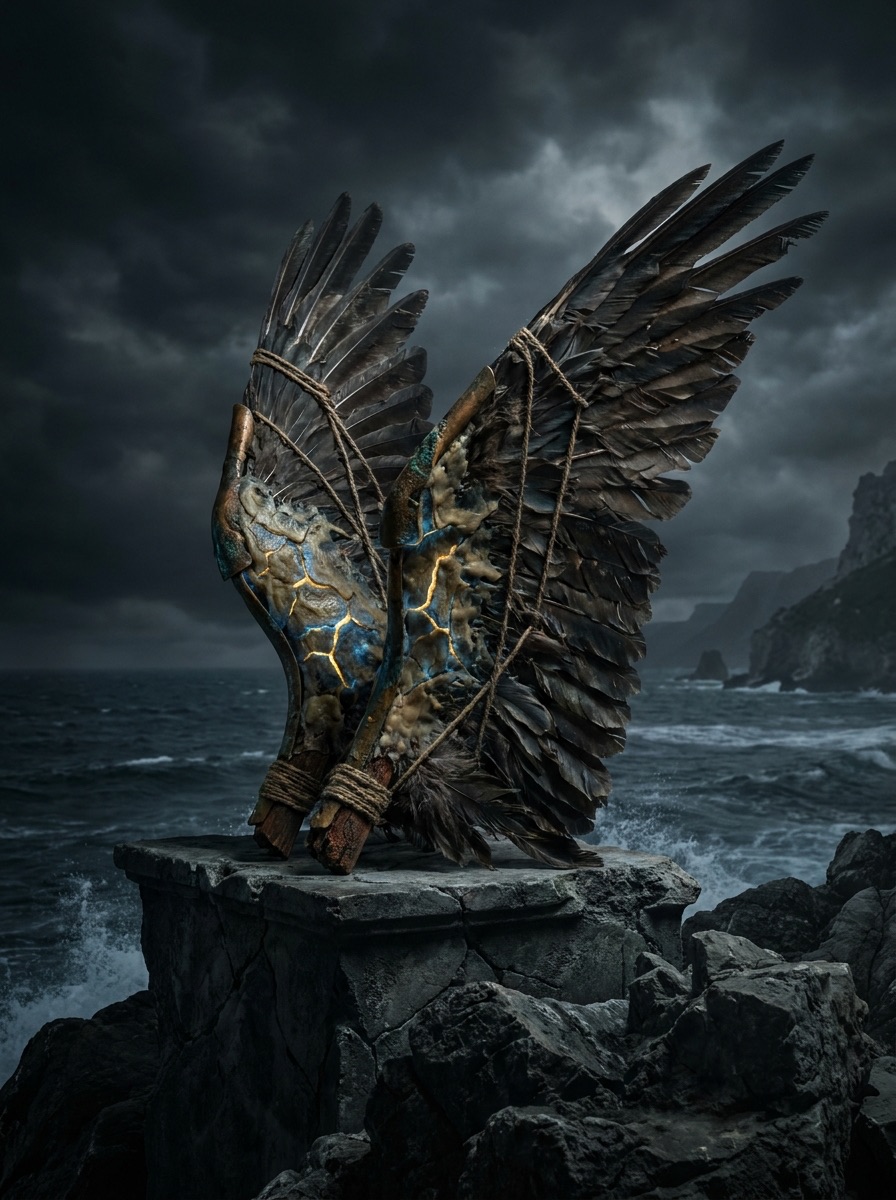
The Wings of Daedalus and Icarus are artificial flying wings in Greek mythology, made by Daedalus from feathers, thread, and wax. They were first used by father and son to escape from Crete, and later became one of the most famous flying devices because of Icarus’s fall into the sea.
Origin Story
On Crete, King Minos trapped Daedalus and Icarus on the island and forbade them to leave by ship. Daedalus looked at the sails on the sea and the birds in the sky, and devised a way out that no one had taken before. He gathered feathers and joined them into wings with thread and wax, first testing them for himself and then fastening them onto Icarus. Father and son thus flew away from Crete; but Icarus flew too high, the sun softened the wax, the feathers scattered, and he finally fell into the sea.
Powers
The main power of these wings is to let a person rise from the ground and fly, crossing a sea blockade and escaping a place of imprisonment. They also have an obvious fragility: they are vulnerable to heat, and the wax can be melted by the sun; if the flight exceeds proper limits, the wings can lose support. They therefore symbolize both skilled craftsmanship and the strict need for measure.
Article
What it is
The Wings of Daedalus and Icarus are an artificial flying tool woven from feathers and fixed with wax. They were made by Daedalus’s skillful hands. Their central function is not combat, but breaking confinement and helping humans leave an island.
Bearer and use
In the story, Daedalus first tests the wings himself, then gives them to Icarus to use. Before takeoff, Daedalus repeatedly warns his son not to fly too low, lest seawater soak the wings, and not to fly too high, lest the sun melt the wax. The wings are both a means of escape and a dangerous device.
Variants and reliability
“Daedalus and Icarus” clearly preserves the making of the wings, their test flight, and the fall into the sea. No other story clearly explains an earlier origin for them. In the broader classical tradition, they often appear together with Daedalus’s ingenuity and Icarus’s tragedy, and are seen as a symbol of human craft reaching toward the sky.