Greek Mythology
Thunderbolt of Zeus — Greek Mythology
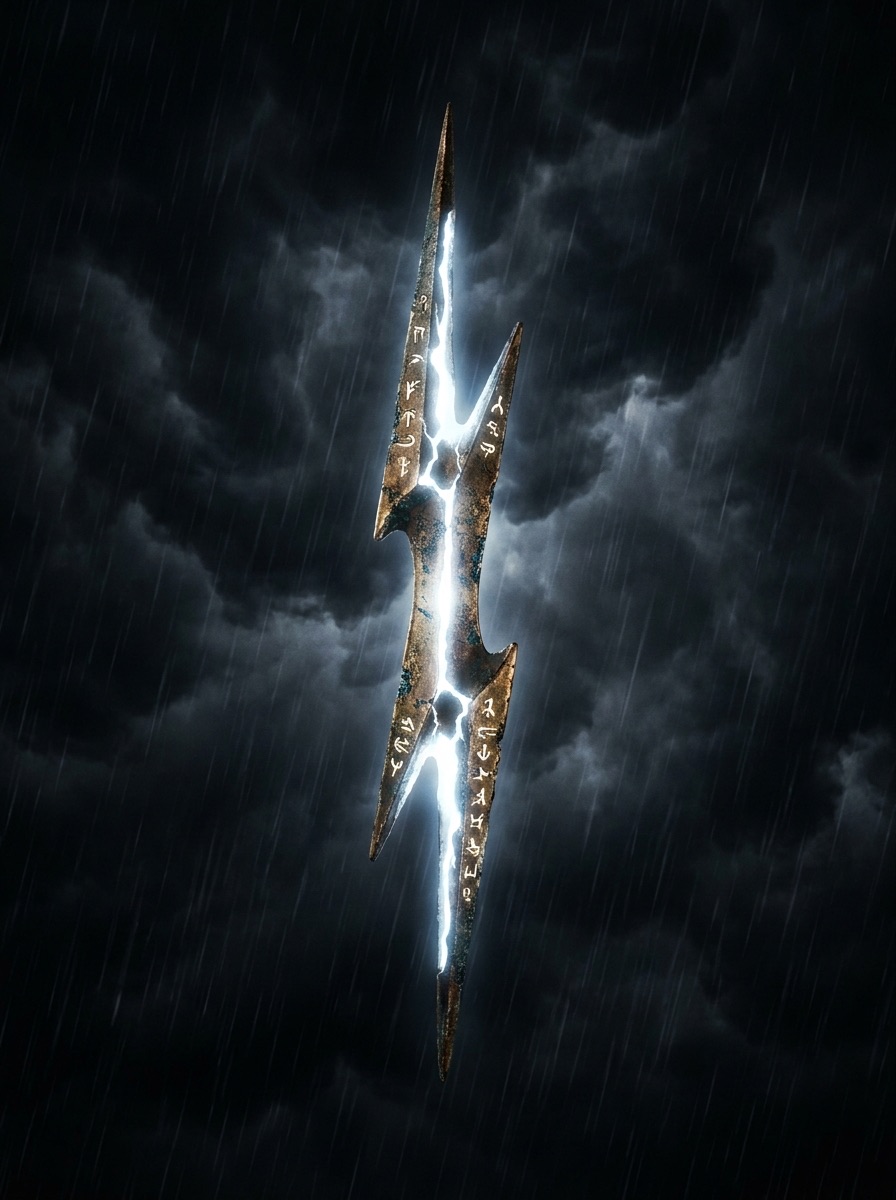
The Thunderbolt of Zeus is the signature weapon of Zeus, king of the gods in Greek mythology, and often appears in the form of thunder, lightning, or a lightning bolt. A common account says that Zeus received it after freeing the Cyclopes. It symbolizes heavenly kingship, divine punishment, and irresistible overwhelming power.
Origin Story
The Thunderbolt of Zeus originates in Zeus’s early struggle against Cronus for divine rule. After growing up, Zeus finds a way to make Cronus disgorge the children he had swallowed, allowing Hestia, Demeter, Hera, Hades, and Poseidon to return to the light. Zeus then frees the imprisoned Cyclopes. The Cyclopes give him thunder, lightning, and the thunderbolt, granting him the power needed to challenge the old king of the gods.
For this reason, the Thunderbolt of Zeus is often regarded as a key weapon in the rise of a new generation of divine authority. Its acquisition marks Zeus’s transformation from a hidden child into a god-king capable of overthrowing Cronus and establishing the Olympian order.
Powers
The Thunderbolt of Zeus can release thunder and lightning, strike down enemies, suppress rebels, and punish those who offend the gods. It symbolizes dominion over the sky and Zeus’s final judgment as king of the gods. In mythological narratives, the thunderbolt is often used to show divine punishment as sudden, violent, and irresistible.
Article
Basic definition
The Thunderbolt of Zeus is one of the most representative divine weapons of Olympian authority. It is not an ordinary javelin or sword, but a weaponized embodiment of the power of the sky. With it, Zeus terrifies enemies, punishes the arrogant, and displays his authority as lord of the sky and king of the gods.
In The Birth and Return of Zeus, Zeus rescues the siblings swallowed by Cronus and then frees the imprisoned Cyclopes. The Cyclopes give thunder, lightning, and the thunderbolt to Zeus, granting him the power to challenge the old king. From then on, the thunderbolt is often linked with Zeus’s right to rule.
Bearer and use
The primary bearer of the thunderbolt is Zeus. It is often regarded as the weapon through which Zeus personally carries out divine punishment. In Seven Against Thebes, Capaneus boasts arrogantly while attacking the city and offends the gods; he is then struck down by the thunderbolt of Zeus. This scene shows that the thunderbolt is not only a battlefield weapon, but also a means by which the gods punish arrogance and impiety.
Variants and reliability
The Birth and Return of Zeus clearly states that Zeus received thunder, lightning, and the thunderbolt after freeing the Cyclopes. This is the clearest narrative basis for the thunderbolt’s origin.
Seven Against Thebes clearly describes Zeus striking down Capaneus with the thunderbolt, proving that the thunderbolt also appears in heroic legend as a weapon of divine punishment.
In broader classical tradition, the Thunderbolt of Zeus is often connected with the sky, kingship, and the Olympian order. Different tellings sometimes distinguish “thunder,” “lightning,” and “thunderbolt,” while at other times they treat them collectively as Zeus’s most important weapon.