Greek Mythology
Syrinx / Pan Pipes / Pan Pipes — Greek Mythology
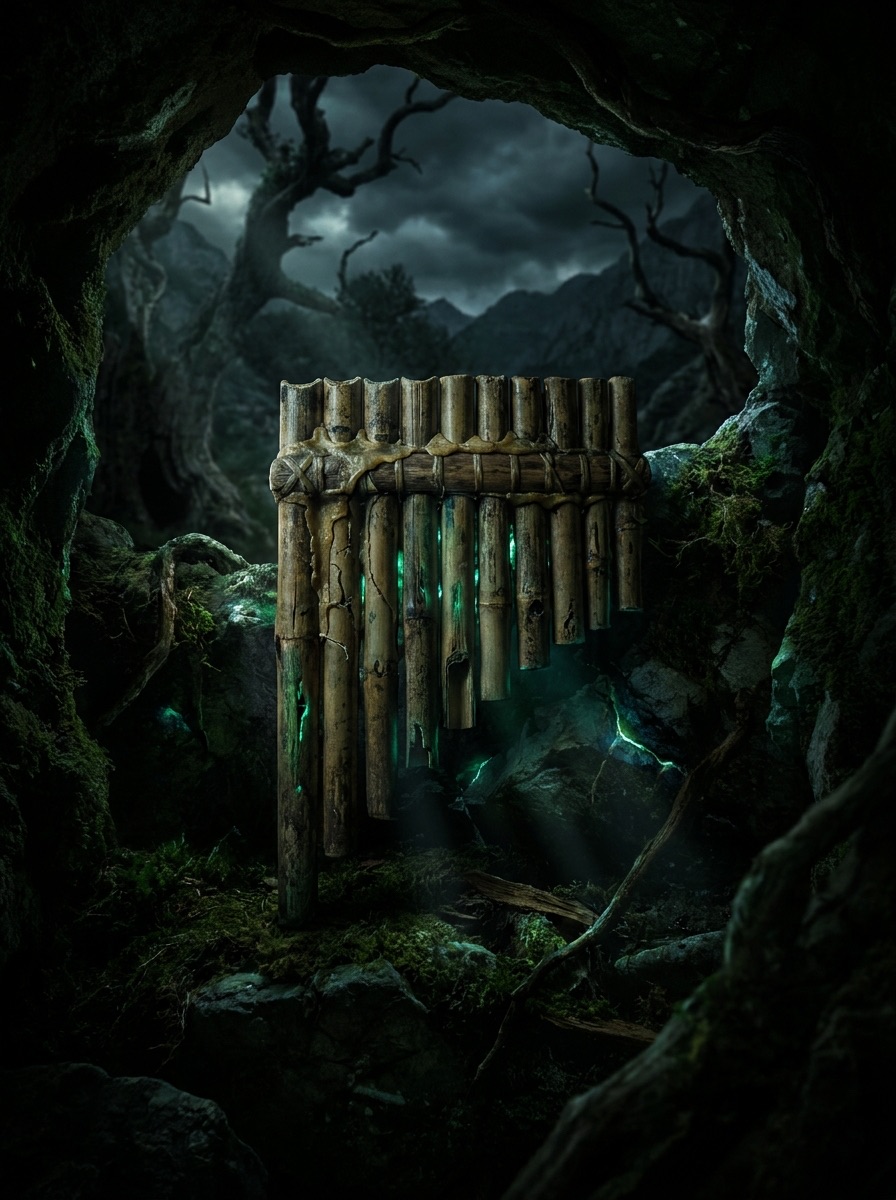
Syrinx / Pan Pipes / Pan Pipes is Pan’s emblematic instrument in Greek mythology, made from reed pipes of different lengths bound together with wax. It is also known as Syrinx / Pan Pipes, Pan Flute, and Reed Pipe. A common tradition says it was named after the nymph Syrinx / Pan Pipes, who was transformed into reeds.
Origin Story
Syrinx / Pan Pipes was originally a nymph fleeing Pan’s pursuit. When Pan reached the riverbank and reached out for her, he found not the girl but a clump of wet reeds. Wind moving through the pipes gave off a soft, mournful sound. Unable to leave them behind, Pan cut the reeds, joined pipes of different lengths with wax, and named the flute Syrinx / Pan Pipes.
Powers
Syrinx / Pan Pipes is not explicitly described as a magical artifact. Its power lies mainly in sound and symbolism: it can produce a plaintive wild melody, embody Pan’s link to pastoral life, and stand in musical contest against Apollo’s lyre. In its origin story, it preserves the name of the nymph Syrinx / Pan Pipes and the echo of her transformed body.
Article
Basic form
Syrinx / Pan Pipes is usually described as a row of reed pipes of different lengths. The pipes are set side by side, and when played they produce a soft, plaintive sound. It belongs to the world of mountains, shepherd song, and nymph traditions, and is often linked with Pan’s image.
Bearer and use
Pan is the instrument’s main bearer and user. In Pan and Syrinx / Pan Pipes, Pan cuts the reeds, joins pipes of different lengths with wax, makes a flute, and names it Syrinx / Pan Pipes.
In King Midas, Pan plays the pipes and claims that he sounds better than Apollo’s lyre. Mount Tmolus awards the victory to Apollo, but Midas says Pan’s music is better and is punished by Apollo with donkey ears. Here the pipes emphasize Pan’s wild music and become part of the contrast with Apollo.
Variants and reliability
Pan and Syrinx / Pan Pipes clearly explains the instrument’s making, its name, and its bond with Pan. King Midas confirms that Pan uses reed pipes in a musical contest, but it does not repeat the origin.
In broader classical tradition, Syrinx / Pan Pipes is often treated as Pan’s signature instrument. It usually stands for the sound of shepherds, mountains, desire, and sorrow rather than for kingship, war, or prophecy.