Greek Mythology
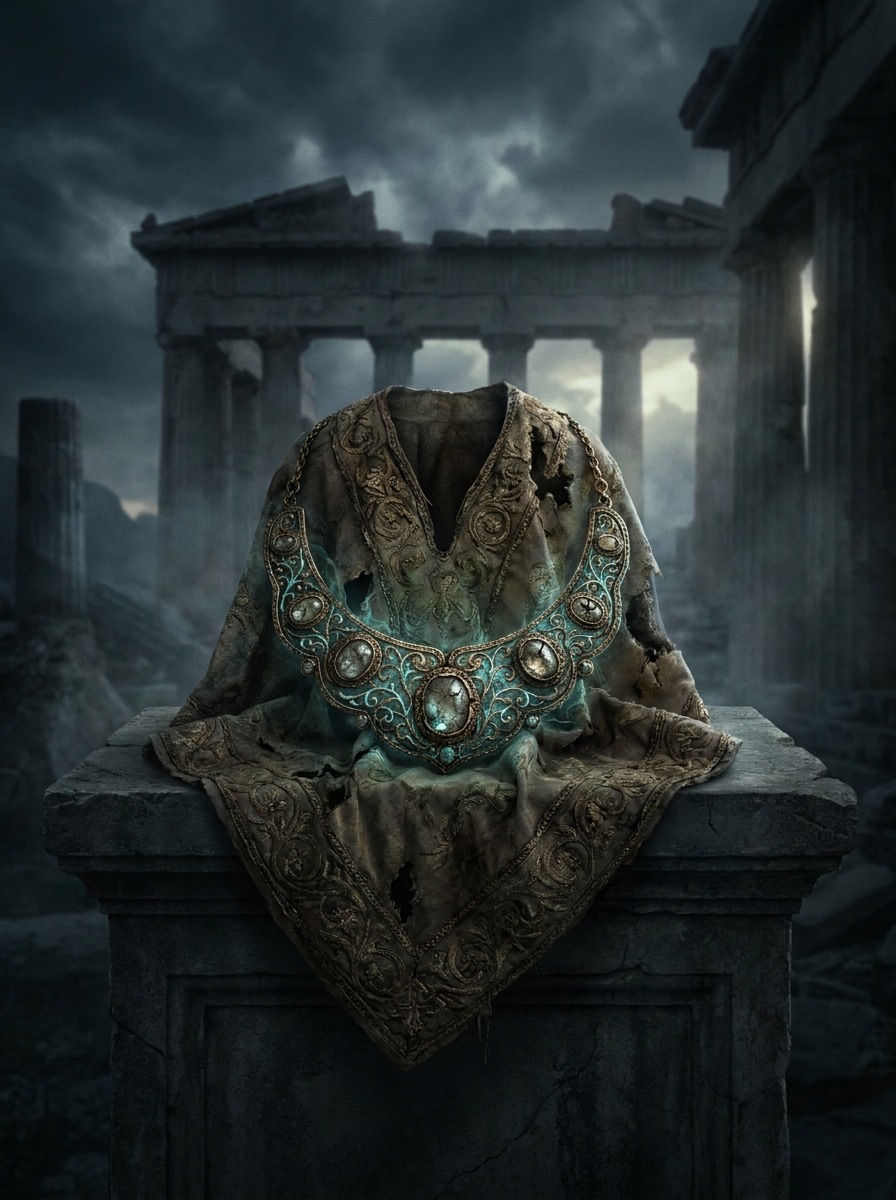
Necklace of Harmonia — Greek Mythology
The Necklace of Harmonia is a ruin-bringing ornament in the Theban cycle of Greek mythology. It originally belonged to Harmonia and is often mentioned together with a robe. In the stories of the Seven Against Thebes and Alcmaeon, it becomes the trigger for bribery, betrayal, and revenge: first forcing Amphiaraus into the expedition, and later drawing Alcmaeon into matricide, exile, and death.
Origin Story
No story clearly explains the origin of the Necklace of Harmonia. The available materials only call it Harmonia's necklace and present it as an already existing treasure within the Theban cycle.
Its main appearance occurs before the expedition of the Seven. To recover the throne of Thebes, Polynices needs Amphiaraus to take part in the war, so he bribes Eriphyle with the necklace. Moved by the treasure, Eriphyle urges her husband to go, making this ornament a key object in the chain of disaster for the first time.
Powers
The Necklace of Harmonia is not described as a weapon, nor does it display any direct spellcasting power. Its power lies in temptation and ruin: as an extremely valuable gift, it can buy loyalty, overpower family bonds and reason, and drive betrayal, war, kin-slaying, and revenge. It is often treated as a dangerous gift, drawing both its holders and those who seek it deeper into familial catastrophe.
Article
What it is
The Necklace of Harmonia is a precious piece of jewelry. The narrative sources do not describe its exact form in detail. They identify it as Harmonia's necklace and pair it with a robe as treasures valuable enough to sway human judgment.
Its importance does not lie in combat use, but in the way it drives a family's fate. Polynices uses it to bribe Eriphyle, persuading her to urge her husband Amphiaraus to join the expedition of the Seven Against Thebes. Amphiaraus knows the campaign is perilous, but because his wife has accepted the necklace and because of an old agreement, he can only put on his armor and go to war.
Bearers and circulation
In Alcmaeon and the Necklace, Polynices first gives the necklace to Eriphyle as a bribe. After the Seven fail in their attack on Thebes, Eriphyle is again moved by treasure and persuades her son Alcmaeon to join the expedition of the later heroes. Alcmaeon then kills his mother in obedience to his father's dying command and is thereafter pursued by the Furies.
When Alcmaeon seeks purification, he leaves the necklace and robe at Psophis. Later, Callirrhoe desires these treasures, and Alcmaeon returns to claim them, falsely saying that he intends to dedicate them to Apollo. Phegeus sees through the lie, and Alcmaeon is killed as a result. At the end of the story, Callirrhoe's sons avenge their father and finally dedicate these trouble-bringing treasures at Delphi.
Variant accounts and reliability
Seven Against Thebes clearly preserves the necklace's role as a bribe: Amphiaraus does not want to go to war, but he is forced to join because his wife has accepted the necklace. Alcmaeon and the Necklace further narrates the circulation of the necklace and robe among Eriphyle, Alcmaeon, and the household of Phegeus, and their eventual dedication at Delphi.
The available narrative materials do not explain in detail how the necklace was made, nor do they explain why it first belonged to Harmonia. Broader traditions about its maker, its status as a wedding gift, or the source of its curse are not directly adopted here.