Greek Mythology
Lyre of Orpheus — Greek Mythology
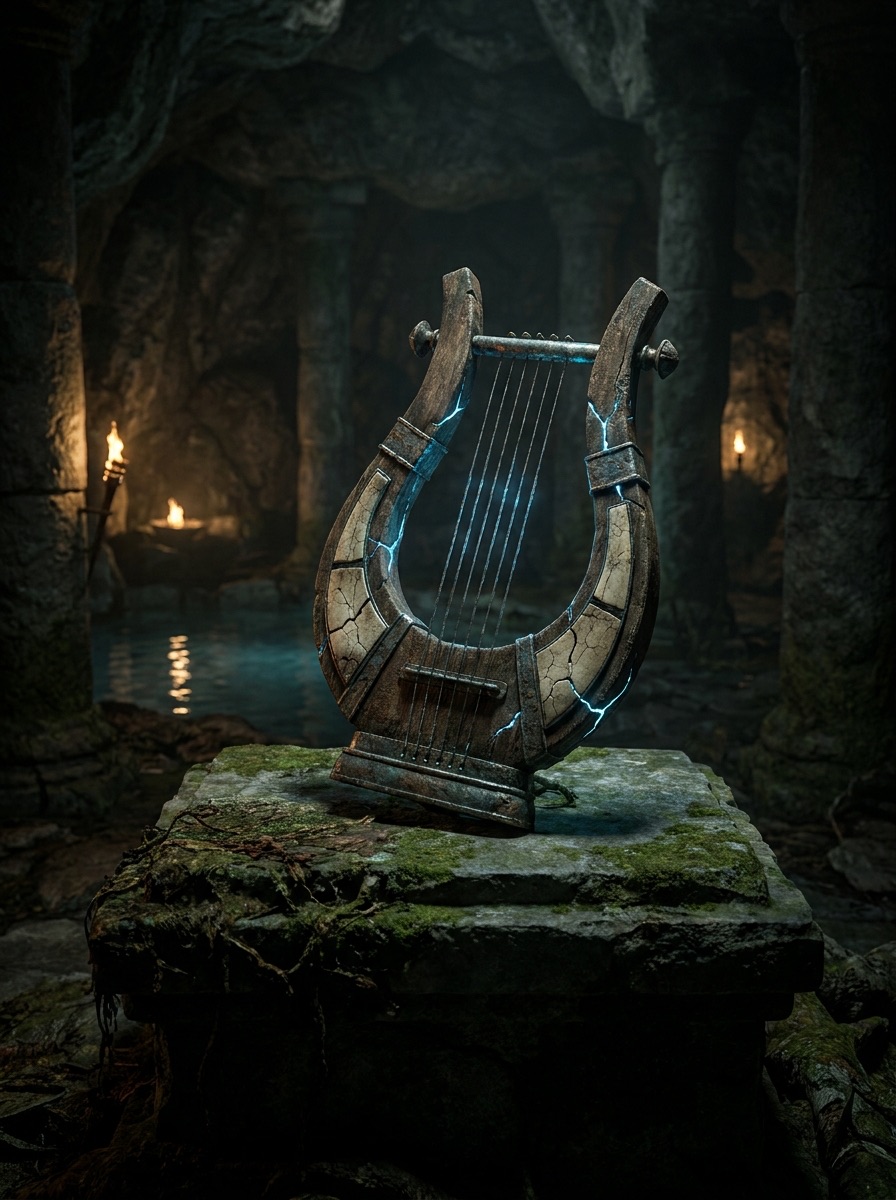
The Lyre of Orpheus is the instrument carried by the Thracian singer Orpheus in Greek mythology, also known as Orpheus' Lyre or Orpheus' Harp. Its music can soothe wild beasts, move trees, touch the spirits of the underworld, and overpower the seductive song of the Sirens. It is one of the most iconic sacred objects in the myths of Orpheus.
Origin Story
No story clearly states who made the Lyre of Orpheus or how it first came into Orpheus’ possession. In the available narratives, it already appears as Orpheus’ personal instrument and is inseparable from his power of song.
Its first major display is Orpheus’ descent to the underworld to save Eurydice. The lyre’s music opens a path through the realm below and moves the ferryman, the guard dog, the dead, and the royal couple of the underworld. Later, during the Argonauts’ return voyage, it acts against the song of the Sirens, suppressing temptation and protecting his companions.
Powers
The Lyre of Orpheus has strong powers of soothing, summoning, and suppression. It can quiet wild beasts and draw trees near; it can move the ferryman of the underworld, the guard dog, the dead, Hades, and Persephone; and it can overpower the song of the Sirens, weakening its temptation. It is often seen as a symbol of Orpheus’ poetry, music, mourning, and ability to cross boundaries.
Article
Nature of the object
The Lyre of Orpheus is a mythic instrument known for the power of music. It is not merely an accompaniment, but an outward symbol of Orpheus' gift for song. Wherever its music is heard, wild beasts grow calm, trees draw near, and the dead pause in their cries of pain.
In the story of Orpheus descending to the underworld in search of Eurydice, the lyre goes with him into the realm below. With his lyre and song, Orpheus moves the ferryman, the guard dog, and the suffering dead, and finally persuades Hades and Persephone to allow Eurydice to return to the world of the living.
Bearer and use
The lyre’s main bearer is Orpheus. He uses its music in forests, on riverbanks, during the voyage of the Argo, and in the underworld. Its sound can soothe nature and resist danger.
In the tradition of the Argonauts’ return voyage, the Argo passes through the waters of the Sirens. The Sirens’ song can bewitch sailors, but Orpheus plays over their temptation and saves most of his companions. This scene makes the lyre not only a lyrical instrument, but also an object that protects voyagers’ minds and spirits.
Variants and reliability
Orpheus and Eurydice explicitly describes Orpheus descending to the underworld with his lyre and moving the beings of the dead with his song. The Return of the Argonauts explicitly describes Orpheus using his music to overpower the song of the Sirens. The Death of Orpheus preserves the tradition that, after his death, his head and lyre drifted downstream while the song had not fully ceased.
These materials all confirm the close bond between the lyre and Orpheus, but they do not clearly state who made the instrument, where it first came from, or how it was passed down. Its origin should therefore be treated as unstated in these narratives. Its reliable core is that Orpheus carries and uses it to reveal his extraordinary musical power.