Greek Mythology
Cap of Invisibility — Greek Mythology
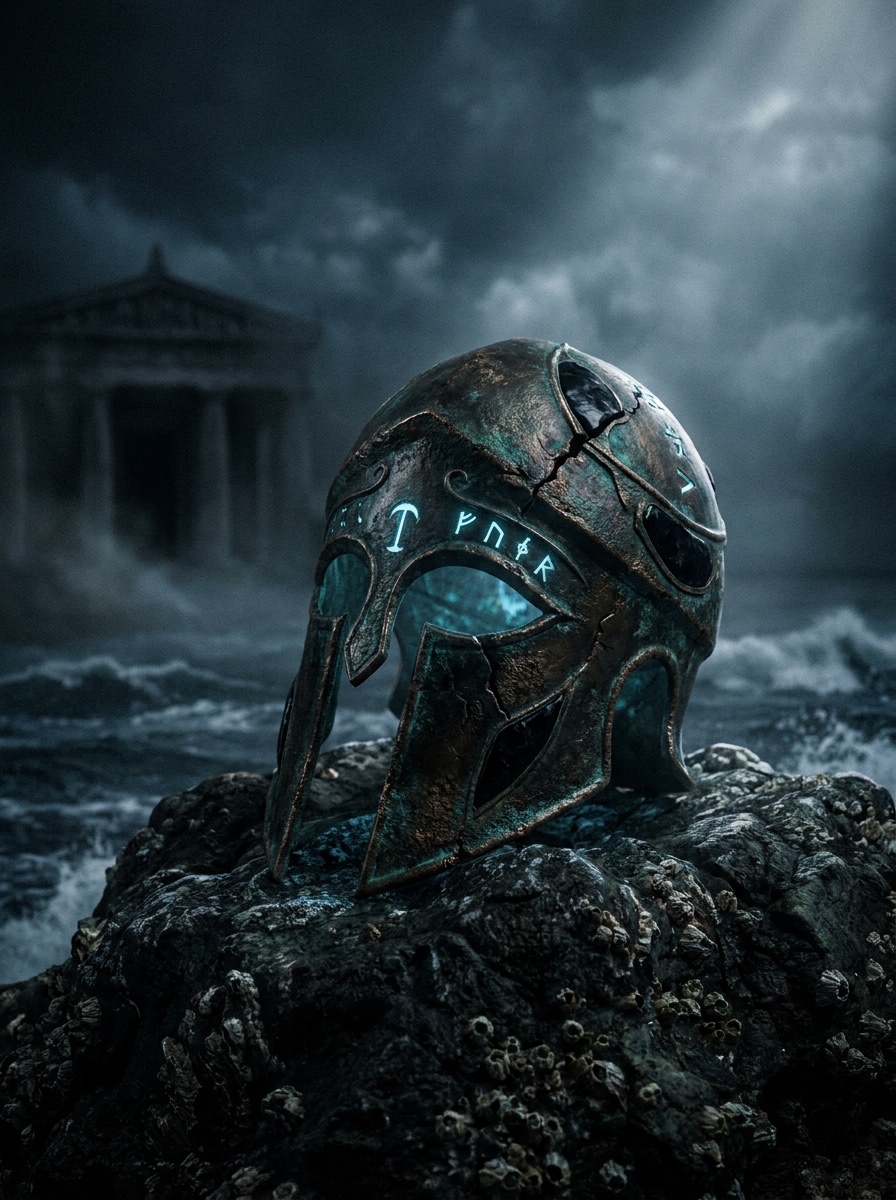
The Cap of Invisibility is a divine object in Greek mythology that can hide its wearer from sight. Common tradition treats it as belonging to Hades, with aliases such as Hades' Helmet, Helm of Hades, or Helm of Darkness. It is often linked to divine authority and to heroes acting in secret.
Origin Story
No story clearly explains the origin of the Cap of Invisibility. Common classical accounts assign it to Hades and include it among divine objects given or lent to heroes. It is often viewed as part of the lord of the underworld’s authority, and also as an auxiliary divine tool that helps a hero enter dangerous places and avoid a monster’s gaze.
Powers
The Cap of Invisibility’s main power is to conceal its wearer, making them difficult for enemies to see or track. It is not known for direct destructive force, but for stealth, approach, escape, and avoiding a gaze. Symbolically, it represents darkness, concealment, and the unseen power of the underworld.
Article
Object identity
The Cap of Invisibility is sometimes described as a cap and sometimes as a helmet. Its defining feature is that it conceals the wearer, keeping them unseen by enemies. Because it is associated with Hades, it often carries symbolic meanings of the underworld, darkness, and invisibility.
Bearer and use
In broader classical tradition, the Cap of Invisibility is often called the Helm of Hades. As lord of the underworld, Hades is closely tied to powers of concealment, gloom, and the unseen. In traditions about Perseus killing Medusa, he is also often said to complete his task with the help of several divine objects, including the Winged Sandals, a magic pouch, a curved blade, and a helmet that hides him from sight.
Various traditions and reliability
The Titan War places Hades in the divine-war background after Zeus overthrows Cronus, but it does not clearly describe the making, acquisition, or use of the Cap of Invisibility.
Perseus and Medusa, The Return of Perseus, and Perseus and Andromeda preserve episodes in which Perseus uses equipment such as the magic pouch, Winged Sandals, and curved blade, but the available material does not directly mention the Cap of Invisibility. Therefore, the link between the Cap of Invisibility and Perseus is treated here only as a common pairing in broader tradition.