Greek Mythology
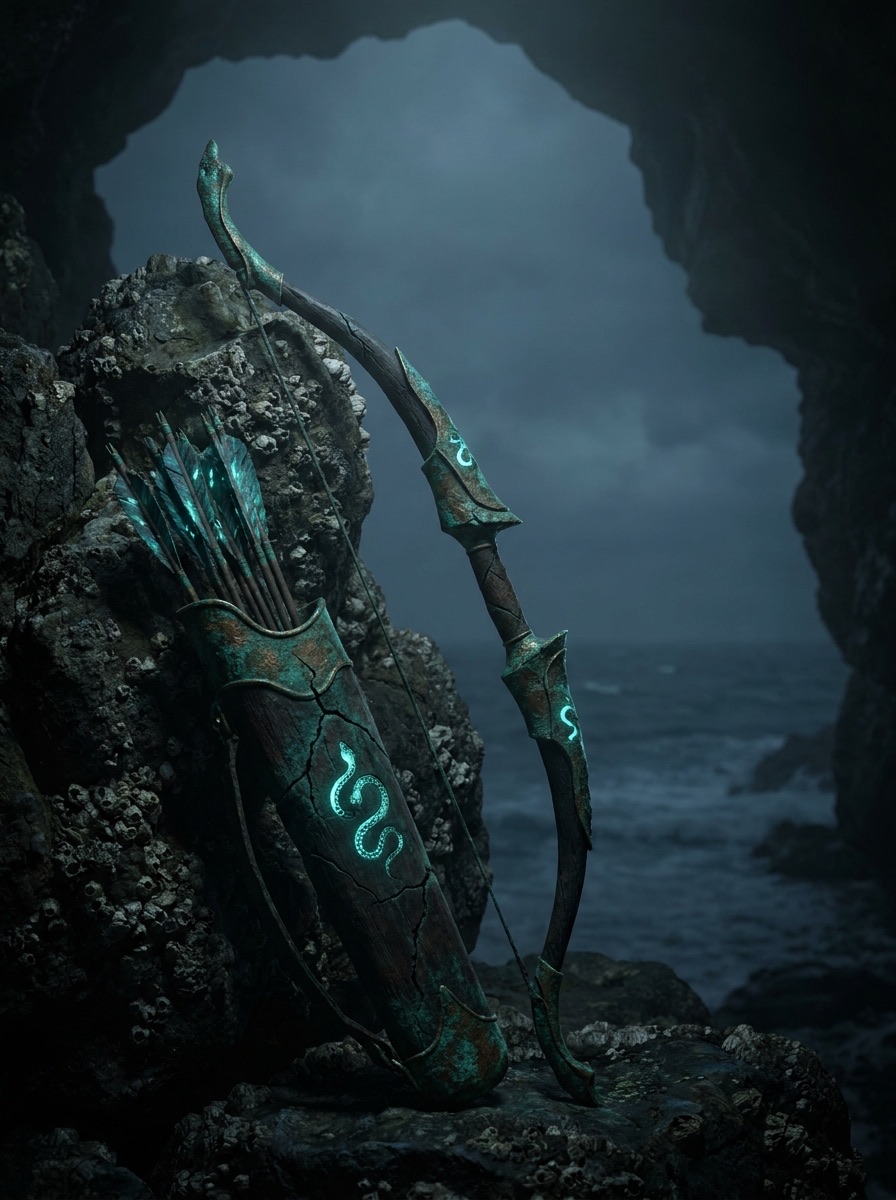
Bow and Arrows of Heracles — Greek Mythology
The Bow and Arrows of Heracles are the long-range weapons used by the Greek hero Heracles, also known as Heracles' Bow or Heracles' Divine Bow. After the death of the Lernaean Hydra, the arrowheads were dipped in its poisonous blood, becoming poisoned arrows deadly from even a scratch. Later, the weapons were also tied to Philoctetes and the outcome of the Trojan War.
Origin Story
No story clearly states who made Heracles' bow itself, or where it first came from. In the existing narratives, the clearest origin event is the transformation of the arrows after the death of the Lernaean Hydra. Heracles cut open the serpent's body and dipped the arrowheads in its blood, turning the original arrows into fearsome poisoned arrows. After this, the bow and arrows were no longer only the hero's missile weapon, but also a deadly relic carrying the Hydra's poison.
Powers
The Bow and Arrows of Heracles have powerful long-range killing force. After the arrowheads were dipped in the poisonous blood of the Lernaean Hydra, even a scratch to the flesh could bring death. They can shoot down the vicious eagle and free Prometheus; they can also kill Nessus, whose poisoned blood later leads to Heracles' death. As a relic, they also carry prophetic significance: Philoctetes must return to the battlefield with this bow and arrows before Troy can fall.
Article
Weapon identity
The Bow and Arrows of Heracles are among the most important pieces of Heracles' heroic equipment, often appearing alongside his club and lion skin. The club expresses his close-range strength, while the bow and arrows express his power at a distance and his force of punishment. They are not an ordinary hunting bow, but a heroic weapon involved in several key mythological events.
Bearer and use
In the deeds of Heracles, this bow and arrows are used to kill dangerous enemies and end disasters. Heracles used an arrow to shoot down the vicious eagle that devoured Prometheus' liver, freeing the bound Prometheus. He also shot the centaur Nessus with an arrow, stopping Nessus from carrying off Deianira.
After Heracles' death, the bow and arrows appear with Philoctetes. When the Greek fleet abandoned Philoctetes on the island of Lemnos, they still left him clothing, food, and the Bow and Arrows of Heracles. Later, the Greeks learned from prophecy that Troy would not fall unless Philoctetes returned to the battlefield with Heracles' bow and arrows.
Variant accounts and reliability
The Lernaean Hydra clearly states that, after killing the Hydra, Heracles cut open its body and dipped his arrowheads in the poisonous blood; from then on, the arrows became deadly poisoned arrows. The Later Deeds of Heracles and The Death and Apotheosis of Heracles preserve the later use of these arrows in subsequent events.
Philoctetes Abandoned on Lemnos and Neoptolemus and the Return of Philoctetes clearly connect this bow and arrows with Philoctetes, the Trojan War, and prophecy. The existing narratives do not explain in detail how Philoctetes first obtained the Bow and Arrows of Heracles, so the transfer should not be presented as one single certain version.